The Road is a man and his son, trying to stay alive in a rapidly dying, post-apocalyptic world. The sun is always hidden by clouds, everything is dried up and dying, covered with ash. There are still people, a few, but of the survivors, a fair number have resorted to their worst impulses. Cannibalism, slavery, makeshift armies marching in search of, whatever is left to take, basically.
Through all this, the man and the boy are headed for the coast. Almost constantly on the verge of starvation, the man already steadily declining in health, no guarantees the coast is going to be any better. The man is trying to teach the boy to be good, but this comes with complications. If they're the "good guys", as they insist, they should help people, other good guys at least. But their ability to help is limited, it isn't easy to discern good guys, and the man has one overarching prerogative: protect the boy, and if that isn't possible, grant a quick death.
Not a hopeful book. The world isn't going to magically be fixed, except perhaps by time. They manage to keep stumbling on just enough food at the right time to keep going, but it feels like postponing the inevitable. But I like how McCarthy writes the boy, the way he occasionally uses phrases you wouldn't expect, that he must have heard his father or mother say at some point.
There's a shift in the relationship between the two after the man comes down with the flu for several days. The boy is a little more independent, more willing to stride ahead and leave his father pushing the cart full of their possessions. Prior to that, the boy had disagreed with some of his father's decisions, pleaded with him, but ultimately fell into step, because he was still just a scared kid. That still happens after the sick spell, but not as much. The man is more vulnerable, the boy was able to successfully care for him, and the boy is probably starting to accept things he knew on some level. He knew about his father's coughing fits in the night, but didn't comment on them until near the end. The kid's preparing himself for the end (I wonder if his father sad anything while sick that helped prompt it).
The dialogue is spare, the boy's unusual phrasing choices aside, but the man's internal monologue can get highly descriptive, or meditative. But he's had years to mull over this world, so I wonder how many times he's gone over the same ground in his mind.
'Finally he put it out of his mind. The notion there could be anything to correct for. His mind was betraying him. Phantoms not heard from in a thousand years slowly rousing from their sleep. Correct for that.'
Tuesday, February 07, 2017

Monday, February 06, 2017
What I Bought 2/1/2017
Hey, comics from just last week! Almost timely! A new book enters the fray! I officially dropped Deadpool - for at least the next three months. We'll see what the May solicits bring, assuming we aren't all dead by then!
 The Unbelievable Gwenpool #11 by Christopher Hastings (writer), Myisha Haynes (artist), Rachelle Rosenberg (color artist), Clayton Cowles (letterer) - I would never have pegged that as David Lopez' art on the cover. The skeleton cat's a nice touch.
Gwen has apparently lost all her friends and cronies and is back to solo merc work. Taking a job to protect a small town from a single vampire, she learns the vampire is actually Blade, who is there because a necromancer has been resurrecting all his old friends as they passed away. Blade is convinced to let them be because they aren't harming anyone. Then Gwen finds out the necromancer is stealing the life energy of his friends' children to power his magic. Isn't that just like those fucking Baby Boomers. They'll probably justify by claiming their kids don't buy enough dish soap or something.
Bit of strange place to come into the book. Gwen being alone and a little depressed, and maybe the luster of running around the Marvel Universe is starting to wear off. And her awareness that trying to fight Blade is a bad idea, because he's an important enough character she probably can't kill him like she could some faceless, irrelevant vampire. That seems to be one of the major conceits of the series, how Gwen's understanding of how comics work dictates a lot of her actions, and it's a good hook. But speaking as someone who argues with his internal monologue, her description of that as 'crazy' is hurtful to me. I like the idea of the necromancer just being lonely and missing his friends, but still, he's a frickin' necromancer.
It took me too long to figure out why Gwen was wearing that thing around her neck. First I thought it was a neck brace, maybe because she hurt herself holding that snotty kid when she jumped out of the airplane. Then I figured maybe it was a scarf, because upstate New York is cold. Which you'd think would prompt her to get some pants, too, but comic book logic. Then it dawned on me she's wearing it to protect her neck from bites. Duh. The sheepish skeleton who admits he might be the reason Blade heard about them was adorable. He just wanted to be friendly while he gardened! Haynes' art is properly expressive for the comedy bits. There wasn't really enough fighting for me to tell how she does with action sequences, but that's OK.
The book has made a good first impression on me, and next month, Christopher Hastings gets to write Arcade in the book, which I am really stoked for. Oh, the deathtraps that combination should conceive of.
 Nova #3, by Jeff Loveness (writer), Ramon Perez (writer/artist), Ian Herring (color artist), Albert Deschesne (letterer) - It loos like Rich is practicing yoga. Don't force the stretch, Rich.
The assassins are here for Nova helmets, and have put a bomb in the brain of the Celestial head that is Knowhere as a failsafe. Rich buys Sam time to try and reach the bomb, but when Sam can't contain the blast, Rich eats the energy by releasing his inner Many-Angled One. Which Sam missed because he was busy being unconscious. So Rich is definitely fully aware of how he's back from the dead - I'm assuming deal made with what was left of the Many-Angled Ones - and is hiding it. Which will totally not come back to bite anyone in the ass. Speaking of biting asses, he's going to encounter Gamora next issue, which is not the old flame I would like to see him interact with, but if he's potentially evil, better to keep him away from Namorita, anyway. It's sweet that Gamora at least smiled in the second photo, though I don't remember her wearing the fishnet outfit when she and Rich were together. Although it's an improvement on the thing she did wear.
The sequence where Rich clocks the tiger with his helmet before donning it, and Sam zooms off, the arc of his flight taking him from the panel it starts in, back towards the panel before (where Rich puts his helmet on, so that we see those things are happening simultaneously, that these two are on the same page), and then Sam's movement draws our eye to the far right side of the page where Death's Head is losing an arm to Rich, and that gets us into the brief fight. That was pretty well laid out. It feels like it could have been confusing, but Perez and Herring made it work. Herring's color work is still nicely vivid and attention-getting. Lots of bright blues and deep reds, that ashy purplish color Rich's skin turns as he starts to change. There are a lot of panels with not much in the way of backgrounds, but the colors mostly compensate.
I still don't love the book, but it's like I said Monday, it's got potential.
 The Unbelievable Gwenpool #11 by Christopher Hastings (writer), Myisha Haynes (artist), Rachelle Rosenberg (color artist), Clayton Cowles (letterer) - I would never have pegged that as David Lopez' art on the cover. The skeleton cat's a nice touch.
Gwen has apparently lost all her friends and cronies and is back to solo merc work. Taking a job to protect a small town from a single vampire, she learns the vampire is actually Blade, who is there because a necromancer has been resurrecting all his old friends as they passed away. Blade is convinced to let them be because they aren't harming anyone. Then Gwen finds out the necromancer is stealing the life energy of his friends' children to power his magic. Isn't that just like those fucking Baby Boomers. They'll probably justify by claiming their kids don't buy enough dish soap or something.
Bit of strange place to come into the book. Gwen being alone and a little depressed, and maybe the luster of running around the Marvel Universe is starting to wear off. And her awareness that trying to fight Blade is a bad idea, because he's an important enough character she probably can't kill him like she could some faceless, irrelevant vampire. That seems to be one of the major conceits of the series, how Gwen's understanding of how comics work dictates a lot of her actions, and it's a good hook. But speaking as someone who argues with his internal monologue, her description of that as 'crazy' is hurtful to me. I like the idea of the necromancer just being lonely and missing his friends, but still, he's a frickin' necromancer.
It took me too long to figure out why Gwen was wearing that thing around her neck. First I thought it was a neck brace, maybe because she hurt herself holding that snotty kid when she jumped out of the airplane. Then I figured maybe it was a scarf, because upstate New York is cold. Which you'd think would prompt her to get some pants, too, but comic book logic. Then it dawned on me she's wearing it to protect her neck from bites. Duh. The sheepish skeleton who admits he might be the reason Blade heard about them was adorable. He just wanted to be friendly while he gardened! Haynes' art is properly expressive for the comedy bits. There wasn't really enough fighting for me to tell how she does with action sequences, but that's OK.
The book has made a good first impression on me, and next month, Christopher Hastings gets to write Arcade in the book, which I am really stoked for. Oh, the deathtraps that combination should conceive of.
 Nova #3, by Jeff Loveness (writer), Ramon Perez (writer/artist), Ian Herring (color artist), Albert Deschesne (letterer) - It loos like Rich is practicing yoga. Don't force the stretch, Rich.
The assassins are here for Nova helmets, and have put a bomb in the brain of the Celestial head that is Knowhere as a failsafe. Rich buys Sam time to try and reach the bomb, but when Sam can't contain the blast, Rich eats the energy by releasing his inner Many-Angled One. Which Sam missed because he was busy being unconscious. So Rich is definitely fully aware of how he's back from the dead - I'm assuming deal made with what was left of the Many-Angled Ones - and is hiding it. Which will totally not come back to bite anyone in the ass. Speaking of biting asses, he's going to encounter Gamora next issue, which is not the old flame I would like to see him interact with, but if he's potentially evil, better to keep him away from Namorita, anyway. It's sweet that Gamora at least smiled in the second photo, though I don't remember her wearing the fishnet outfit when she and Rich were together. Although it's an improvement on the thing she did wear.
The sequence where Rich clocks the tiger with his helmet before donning it, and Sam zooms off, the arc of his flight taking him from the panel it starts in, back towards the panel before (where Rich puts his helmet on, so that we see those things are happening simultaneously, that these two are on the same page), and then Sam's movement draws our eye to the far right side of the page where Death's Head is losing an arm to Rich, and that gets us into the brief fight. That was pretty well laid out. It feels like it could have been confusing, but Perez and Herring made it work. Herring's color work is still nicely vivid and attention-getting. Lots of bright blues and deep reds, that ashy purplish color Rich's skin turns as he starts to change. There are a lot of panels with not much in the way of backgrounds, but the colors mostly compensate.
I still don't love the book, but it's like I said Monday, it's got potential.
Sunday, February 05, 2017
Foyle's War 6.3 - The Hide
Plot: Foyle's replacement has finally arrived, and he can hardly wait to get out the door. His brother-in-law has gotten him booking on a ship headed to America, and Foyle's raring to go. But before he can leave, he sees a newspaper headline about a James Devereaux, on trial for treason. Devereaux was captured in the early stages of the war, and eventually agreed to join the British Free Corps. An idea of Hitler's to dress British POWs up as Nazi soldiers and have them fight the Soviets. James, curiously, is offering no defense, and won't help his attorney Mr. Deakin do so, either. But Foyle sticks his nose is, for reasons he keeps to himself, but which involve James' mother, Caroline, who died when James was young.
At the same time, Milner is investigating the death of an Agnes Lyttleton, who was strangled in the room she was renting. A photo was taken from her bedside, one her landlady can only confirm had a picture of Agnes' boyfriend, a soldier who had been overseas, and wrote to her as "Jack". It just so happens we saw a Jack Stanford in a flashback to James' time in the Free Corps. Agnes was also working for the Devereaux', helping James' father, Charles, research his family history. Charles is not terribly helpful, but could perhaps be excused as being preoccupied with his son's imminent execution. And it seems certain to happen, as Foyle is busier asking questions about James' hobbies and his old piano teacher - a Mr. Rothstein who was arrested and sentenced to five years' hard labor for allegedly stealing some of Caroline's jewelry - than he is figuring out some way to clear James' name. But while the route is a little more circuitous than normal, it does eventually lead to answers.
Over at Hill House, Adam faces first the pressing failure of his guesthouse, but then learns a new housing development plans to not only knock down his house and many hundreds of others, but will also tear up the nearby green, a common ground left open for centuries. Adam's efforts to rally public support against this effort, while briefly landing him in jail for assault, also stir an interest in politics in him. And being so bold possibly also gave him the confidence to ask Sam to marry him.
Quote of the Episode: Jack - 'Oh, I'm all for hanging. It's quieter.'
Does Foyle go fishing? No.
Things Sam can do: Think to ask one of Foyle's old teachers about him when she gets the chance. Rush into a recently exploded building to look for survivors.
Other: When we learned Caroline was supposedly kind by a deer that gored her, then saw the "hide", a sort of nature-viewing blind, had antlers hanging from the ceiling, I was sure young James had pulled them down as part of some game and accidentally killed his mother. I was wrong. Oh well, sun rises in east.
Foyle went off on Deakin for not trying harder to save James at one point, which was another of those times where Foyle gets on my nerves. He rattles off all the things he's found out which are significant in some way, basically asking why Deakin hadn't figured any of this out. I'm not sure how much of it he could have learned through his channels, so it comes off as, 'Why haven't you used all these things I am just now telling you?' I don't see how most of it would exonerate James, especially as James is not offering any defense of his actions. He's talked to some men from James' unit in the British Army, all who spoke highly of his leadership, but I don't think that's going to outweigh the rest. James is offering no help, and his father isn't doing much, either.
Foyle is headed to America to confront Howard Paige, the murdering industrialist from Episode 2.1, "Fifty Ships". We will, sadly, not get to see Foyle navigating the post-World War II United States in his pursuit, only hear about it after the fact, next week. Nuts.
Foyle got Adam out trouble, which I'm a leery of. Adam knocked a guy to the ground with sufficient force he was knocked unconscious on a rock. And it wasn't even the guy spearheading the development plan, Mr. Harrison. It was some poor guy on the survey team. Who knows what kind of brain damage he could have now? But those big-time athletes are always able to get their indiscretions swept under the rug by the authorities.
At one point, we learn that someone within the Free Corps was working for MI9, using their position to send letters with various intelligence to them. But the Free Corps has no idea who this person is, other than they sent letters to Agnes, addressed as "Jack". This naturally factors into both James' trial and Agnes' death.
Milner and Foyle get along much better this time around. Milner gives his subordinate Perkins a wrap across the knuckles for being disrespectful to Foyle this time, which. Look, Perkins is a schmuck. Can't tell a mare from a stallion (horses are involved in one scene), misses evidence, really only seems good for giving looks of sarcastic disbelief. But that whole thing where Foyle dressed him down for essentially not waiting to speak until spoken to, still irks me. Anyway, Milner and Foyle share information, and it helps Foyle to have someone who is still an active police officer to take action. So it was nice to see them part on better terms.
The show felt it necessary to throw in that Sir Charles is at least a bit anti-Semetic (Mr. Rothstein was Jewish). His arrogance wasn't enough, his jealous, domineering, and abusive attitude towards Caroline wasn't enough. The fact his son hates him so much he's willing to be hung as a traitor just to smear the family name isn't enough to render him an awful human being. Nope, have to throw a little something extra in there to seal the deal.
At the same time, Milner is investigating the death of an Agnes Lyttleton, who was strangled in the room she was renting. A photo was taken from her bedside, one her landlady can only confirm had a picture of Agnes' boyfriend, a soldier who had been overseas, and wrote to her as "Jack". It just so happens we saw a Jack Stanford in a flashback to James' time in the Free Corps. Agnes was also working for the Devereaux', helping James' father, Charles, research his family history. Charles is not terribly helpful, but could perhaps be excused as being preoccupied with his son's imminent execution. And it seems certain to happen, as Foyle is busier asking questions about James' hobbies and his old piano teacher - a Mr. Rothstein who was arrested and sentenced to five years' hard labor for allegedly stealing some of Caroline's jewelry - than he is figuring out some way to clear James' name. But while the route is a little more circuitous than normal, it does eventually lead to answers.
Over at Hill House, Adam faces first the pressing failure of his guesthouse, but then learns a new housing development plans to not only knock down his house and many hundreds of others, but will also tear up the nearby green, a common ground left open for centuries. Adam's efforts to rally public support against this effort, while briefly landing him in jail for assault, also stir an interest in politics in him. And being so bold possibly also gave him the confidence to ask Sam to marry him.
Quote of the Episode: Jack - 'Oh, I'm all for hanging. It's quieter.'
Does Foyle go fishing? No.
Things Sam can do: Think to ask one of Foyle's old teachers about him when she gets the chance. Rush into a recently exploded building to look for survivors.
Other: When we learned Caroline was supposedly kind by a deer that gored her, then saw the "hide", a sort of nature-viewing blind, had antlers hanging from the ceiling, I was sure young James had pulled them down as part of some game and accidentally killed his mother. I was wrong. Oh well, sun rises in east.
Foyle went off on Deakin for not trying harder to save James at one point, which was another of those times where Foyle gets on my nerves. He rattles off all the things he's found out which are significant in some way, basically asking why Deakin hadn't figured any of this out. I'm not sure how much of it he could have learned through his channels, so it comes off as, 'Why haven't you used all these things I am just now telling you?' I don't see how most of it would exonerate James, especially as James is not offering any defense of his actions. He's talked to some men from James' unit in the British Army, all who spoke highly of his leadership, but I don't think that's going to outweigh the rest. James is offering no help, and his father isn't doing much, either.
Foyle is headed to America to confront Howard Paige, the murdering industrialist from Episode 2.1, "Fifty Ships". We will, sadly, not get to see Foyle navigating the post-World War II United States in his pursuit, only hear about it after the fact, next week. Nuts.
Foyle got Adam out trouble, which I'm a leery of. Adam knocked a guy to the ground with sufficient force he was knocked unconscious on a rock. And it wasn't even the guy spearheading the development plan, Mr. Harrison. It was some poor guy on the survey team. Who knows what kind of brain damage he could have now? But those big-time athletes are always able to get their indiscretions swept under the rug by the authorities.
At one point, we learn that someone within the Free Corps was working for MI9, using their position to send letters with various intelligence to them. But the Free Corps has no idea who this person is, other than they sent letters to Agnes, addressed as "Jack". This naturally factors into both James' trial and Agnes' death.
Milner and Foyle get along much better this time around. Milner gives his subordinate Perkins a wrap across the knuckles for being disrespectful to Foyle this time, which. Look, Perkins is a schmuck. Can't tell a mare from a stallion (horses are involved in one scene), misses evidence, really only seems good for giving looks of sarcastic disbelief. But that whole thing where Foyle dressed him down for essentially not waiting to speak until spoken to, still irks me. Anyway, Milner and Foyle share information, and it helps Foyle to have someone who is still an active police officer to take action. So it was nice to see them part on better terms.
The show felt it necessary to throw in that Sir Charles is at least a bit anti-Semetic (Mr. Rothstein was Jewish). His arrogance wasn't enough, his jealous, domineering, and abusive attitude towards Caroline wasn't enough. The fact his son hates him so much he's willing to be hung as a traitor just to smear the family name isn't enough to render him an awful human being. Nope, have to throw a little something extra in there to seal the deal.
Friday, February 03, 2017
What I Bought 1/31/2017 - Part 2
It's not a new complaint, but I hate it when channels interrupt cool action scenes with commercial breaks. John Wick was on USA last week, and they went to commercial right in the middle of the cool night club shootout. Yeah, I have it on DVD, I can watch it whenever, but it's still nice when I come across something I like to watch on TV by good timing.
 Darkwing Duck #7, by Aaron Sparrow and James Silvani (storytellers), Andrew Dalhouse, Paul Little, and Matt Herms (colorists), Brandon DeStefano (letterer) - I don't know what's up with Darkwing or Gosalyn's eyes. Darkwing rarely does the "no pupil" look a lot of other masked adventures do, and Gosalyn looks like she's possessed by Duckthulu.
Zombie potatoes attack St. Canard on Halloween, leading to an extended series of Walking Dead, riffs, I think. I'm positive Herb Muddlefoot carving a bunch of the spuds up with a spatula wrapped in barbed wire while wearing a leather jacket was a reference to that Negan guy I see people talking about. Gosalyn wearing Darkwing's hat and having her hair over one eye makes her Carl, correct? Anyway, DW suspects Bushroot, who has escaped from prison, but was drawn here by the call of his one-time would-be vampire potato bride, Posey, who is being used in dastardly experiments by some character I can't place. Oh, and Gizmoduck's in town. Not looking forward to Darkwing getting snippy because he feels inferior to Gizmoduck.
Teaming the heroes up with Bushroot works better than I would have expected, since his reaction to all Darkwing's usual stuff is so different from Gosalyn or Launchpad's. And Bushroot's point that, 'You have a sidekick who's carrying around my disembodied head for. . .well I don't even know why. . . and you want to talk about normal?' cracked me up. On a different note, the scene where Gosalyn and Launchpad discuss how each of them thought they were going to be the one to take over as Darkwing some day was kind of cute.
Silvani really likes drawing Darkwing wielding two gas guns. It's been coming up a lot in this series so far, and I'm not sure why. I guess the response would be, why not, and I don't have a good answer. Also, I know black is supposed to be slimming, but somehow wearing that black jacket made Herb Muddlefoot's head shrink. It looks far too small for his admittedly large frame. But Gosalyn's Halloween costume is appropriately grotesque, so good work there. Silvani mostly works within a six-panel grid, but modifies as necessary. Mostly by going to a five panel setup, with one panel that covers a third of the page when he needs more room for impact. Either to give us a better look at something shocking, or to layout the setting of the next scene for us. On the opposite end, he opts for going to three panels across the page for a specific sequence. The Ratcatcher going amphibious. Gizmoduck taking care of a bunch of zombie spuds. Setting something up, basically.
 Patsy Walker, aka Hellcat #14, by Kate Leth (writer), Brittney L. Williams (artist), Rachelle Rosenberg (color artist), Cory Petit (letterer) - Not a very good plan by Felicia, to control all these non-powered folks, and leave Patsy the Wolverine-trained vampire and the telekinetic.
Zoe tries to help Patsy and Ian get close to Felicia, who has swelled the ranks of her organization considerably by now. It doesn't seem to work, but it's really all a ruse to give Jubilee the chance to get the drop on Felicia. Which works for getting the magic claws away, but then Jubes loses her after Felicia headbutts her? Really, vampire strength and that works on you? But all the friends are saved, and Patsy has magic sneezes now.
The main current running through is Zoe possibly realizing how lousy she was to Ian, and that whatever fond memories she has of their relationship are not shared by him. Which is nice, and it was pleasant to see Ian stand up to her and lay it all out so she couldn't ignore it or bulldoze over what he was saying. The panel where we see Ian as he was, in a blank space with shadows stretching away in different directions was an effective attention-getter. Up to then, all these relatively sedate panels of two people in a living room, having an argument, and then here's a panel of someone feeling terribly lonely and divided.
I'm not sure if it was Williams or Rosenberg, but the art team seemed to be having some trouble with Felicia. Maybe it's just her costume. Drab grey is not really a visually arresting costume choice, and there were times it just didn't look great. But the art looked a little rushed in places. Not everywhere, but there were some places Williams was skimping on details, or shading. I did lie how tall she drew Felicia. Maybe it's just the perspective, where characters are being pushed down to loo up at her, but she seemed much bigger than the other women in the issue. Especially Jubilee. I had never pictured the Black Cat as being particularly tall (about the same as Spidey, and I think Peter is 5 foot 10 or 11), but then Jubilee is 5-5, something like that, so comparatively, Felicia would be big. And it lets her loom over people, which is a prerequisite if she's going to play a crime boss.
Overall, the weakest story so far for the book, but I'm hopeful things will pick up with Patsy's magical sniffles.
 Darkwing Duck #7, by Aaron Sparrow and James Silvani (storytellers), Andrew Dalhouse, Paul Little, and Matt Herms (colorists), Brandon DeStefano (letterer) - I don't know what's up with Darkwing or Gosalyn's eyes. Darkwing rarely does the "no pupil" look a lot of other masked adventures do, and Gosalyn looks like she's possessed by Duckthulu.
Zombie potatoes attack St. Canard on Halloween, leading to an extended series of Walking Dead, riffs, I think. I'm positive Herb Muddlefoot carving a bunch of the spuds up with a spatula wrapped in barbed wire while wearing a leather jacket was a reference to that Negan guy I see people talking about. Gosalyn wearing Darkwing's hat and having her hair over one eye makes her Carl, correct? Anyway, DW suspects Bushroot, who has escaped from prison, but was drawn here by the call of his one-time would-be vampire potato bride, Posey, who is being used in dastardly experiments by some character I can't place. Oh, and Gizmoduck's in town. Not looking forward to Darkwing getting snippy because he feels inferior to Gizmoduck.
Teaming the heroes up with Bushroot works better than I would have expected, since his reaction to all Darkwing's usual stuff is so different from Gosalyn or Launchpad's. And Bushroot's point that, 'You have a sidekick who's carrying around my disembodied head for. . .well I don't even know why. . . and you want to talk about normal?' cracked me up. On a different note, the scene where Gosalyn and Launchpad discuss how each of them thought they were going to be the one to take over as Darkwing some day was kind of cute.
Silvani really likes drawing Darkwing wielding two gas guns. It's been coming up a lot in this series so far, and I'm not sure why. I guess the response would be, why not, and I don't have a good answer. Also, I know black is supposed to be slimming, but somehow wearing that black jacket made Herb Muddlefoot's head shrink. It looks far too small for his admittedly large frame. But Gosalyn's Halloween costume is appropriately grotesque, so good work there. Silvani mostly works within a six-panel grid, but modifies as necessary. Mostly by going to a five panel setup, with one panel that covers a third of the page when he needs more room for impact. Either to give us a better look at something shocking, or to layout the setting of the next scene for us. On the opposite end, he opts for going to three panels across the page for a specific sequence. The Ratcatcher going amphibious. Gizmoduck taking care of a bunch of zombie spuds. Setting something up, basically.
 Patsy Walker, aka Hellcat #14, by Kate Leth (writer), Brittney L. Williams (artist), Rachelle Rosenberg (color artist), Cory Petit (letterer) - Not a very good plan by Felicia, to control all these non-powered folks, and leave Patsy the Wolverine-trained vampire and the telekinetic.
Zoe tries to help Patsy and Ian get close to Felicia, who has swelled the ranks of her organization considerably by now. It doesn't seem to work, but it's really all a ruse to give Jubilee the chance to get the drop on Felicia. Which works for getting the magic claws away, but then Jubes loses her after Felicia headbutts her? Really, vampire strength and that works on you? But all the friends are saved, and Patsy has magic sneezes now.
The main current running through is Zoe possibly realizing how lousy she was to Ian, and that whatever fond memories she has of their relationship are not shared by him. Which is nice, and it was pleasant to see Ian stand up to her and lay it all out so she couldn't ignore it or bulldoze over what he was saying. The panel where we see Ian as he was, in a blank space with shadows stretching away in different directions was an effective attention-getter. Up to then, all these relatively sedate panels of two people in a living room, having an argument, and then here's a panel of someone feeling terribly lonely and divided.
I'm not sure if it was Williams or Rosenberg, but the art team seemed to be having some trouble with Felicia. Maybe it's just her costume. Drab grey is not really a visually arresting costume choice, and there were times it just didn't look great. But the art looked a little rushed in places. Not everywhere, but there were some places Williams was skimping on details, or shading. I did lie how tall she drew Felicia. Maybe it's just the perspective, where characters are being pushed down to loo up at her, but she seemed much bigger than the other women in the issue. Especially Jubilee. I had never pictured the Black Cat as being particularly tall (about the same as Spidey, and I think Peter is 5 foot 10 or 11), but then Jubilee is 5-5, something like that, so comparatively, Felicia would be big. And it lets her loom over people, which is a prerequisite if she's going to play a crime boss.
Overall, the weakest story so far for the book, but I'm hopeful things will pick up with Patsy's magical sniffles.
Thursday, February 02, 2017
A Magical Realm Where Everything Wants To Kill You
I'm iffy on medieval fantasy most of the time. The whole swords and sorcery and wizards with long beards thing can work, but rarely deeply interests me. It just doesn't stack up next to Westerns or sci-fi in terms of setting and genre conventions that interest me. So Skyrim was always going to be fighting an uphill battle. But it was a gift.
Skyrim is in a civil war*, dragons are emerging after centuries of dormancy, and the main character is the legendary Dragonborn**, which means your character will gain power by absorbing the souls of dragons you kill. Or dragons that are killed near you. I was able to gain the soul of one that got killed by a nearby group of giants it attacked instead of me. The main story is about dealing with that, but there are many other factions you can throw in with, or one-off quests to do. Or just wander the countryside and explore. Keep in mind that, as the title of this post states, everything and everyone you meet will try to kill you. There are a few exceptions, but you might as well just start swinging if they approach you and dialogue options don't immediately appear.
I can't blame them. They live in a crappy, mostly frozen land of dragons and no indoor plumbing, with crypts and caves full of undead, possibly dragon-voice wielding, warriors. Because some jackass thought cursing the people who fought alongside the dragons to that existence was actually, you know, a curse. Why not just trap their consciousness inside a dead body that can't move? Then they can watch helplessly as I loot their graves, and I don't have to fight another crypt full of Draugurs. I was 100% done-zo with that within the first few hours. Sadly, it was not done with me, and there was much more Draugur fighting to come.
 A lot of the quests boil down to going to a place to retrieve a thing and bringing it back, with a lot of killing along the way. There were some standouts. I didn't really want to start the Forsworn Conspiracy, but once I got into it, it felt a bit like a detective story. I kept finding dead bodies, discovering clues, being warned off by the equivalent of cops and goons, and eventually the guy who hired me turned up dead. Then everything went to hell.
The guards wanted to arrest me. I wasn't interested, so I hightailed it out of there. But every time I came back to Markath, they tried to arrest me. Which threw a real crimp into my attempt to start the Dark Brotherhood quest line (I had decided by that point if I didn't like anyone in this world other than my housecarl, Lydia, there was no reason not to start taking money to murder some of them***). This despite the fact I was dressed completely differently now (my face covered both times), and was alone where I had a friend before, but somehow they always know immediately that it's me. That makes a lot of fucking sense.
So I let them throw me in their mine/prison. Where I meet the leader of an uprising. The game gives you the choice of killing or helping him. I meant to kill him, but misunderstood when I was supposed to try that and waited too long. So screw it, help him escape. What do I care? He and his guys kill the guards, run amok, I get all my gear back, the quest is over, now I can do what I wanted, and I did. But when I had to return to Markath to learn who The Gourmet was, so I could kill and impersonate him, the guards were back. More critically, they were back to trying to throw me in jail for the same stuff they already threw me in jail for. I couldn't claim innocence, couldn't bribe my way out of it, couldn't even let them throw me in prison, since giving in just caused the dialogue sequence to start over. All I could do was run away.
So the Dark Brotherhood quest line died an angry death. As did the Thieves' Guild quest line when I decided to start that immediately after. The glitch blocked two things I actually was somewhat interested in. That did not help my attitude towards the game.
I did enjoy many of the Daedra quests. The Daedra being creatures that exist mostly in other realms and make themselves known in Skyrim in various ways. Dreams, prophets, drugs, gifts bestowed on the faithful, stuff like that. I ran about 50/50 on helping them and thumbing my nose at them. I helped Astra, but not the one that told me to kill his talking dog servant. I killed all the people who were sick and hiding in the old dwarven city at the behest of one Daedra (he'd made them that way, but was mad one of his followers was keeping them there rather than having them roaming spreading illness). I ended up not killing that guy who wanted to assemble the pieces of some old cursed blade when asked to. What was required of the quests wasn't a whole lot different from all the ones I was so bored by in broad terms, but there was something interesting in dealing with the Daedra. What they wanted was so rarely connected to the major storylines running through the game. Daedra don't give a crap about some civil war, they'd rather torment a mad ghost, or make an entire town suffer nightmares constantly.
 I didn't have a lot of success varying my combat. It figures one of the few games where I actually tried carrying a shield and blocking sometimes, would be one where that was probably the wrong approach. I was informed I'd have been better off either going with a two-handed weapon for more damage, or dual-wielding (which means you can't block). I tried using magic, but it never felt like it was working quickly enough to justify sacrificing being able to carry my shield. I suppose it might have worked if I used it more early on and leveled it up more, so it did more damage later. I did find the stealth option reasonably simple to use, as long as I stuck to sniping people with the bow. Sneaking up for close range attacks was dodgier.
I had the impression you could talk to almost anyone and get some sort of quest. But given my reluctance to engage in another slog through a crypt full of Dragurs, this made me less likely to try talking to random people. Not that I'd be required to do the quest, but I got tired of seeing my menu screen filling up with quests I had no interest in undertaking. That exhaustion was grinding against my completist nature.
I liked Blackreach, which was the remains of a dwarven city sitting in some immense cavern. There were other dwarven cities, but when you're in those, it's lacking something. It's all stone walls, lighting from somewhere, the occasional robot attack. With Blackreach, it was like part of the city fell into the cave, so there was more a collage effect to the setting, which I think I appreciated. Plus it was dark and atmospheric, but with weird crap glowing up on top of pyramids (which I did not venture up to because there were a shitload of Falmer up there and I didn't feel like dying). But sneaking around there was somehow much more interesting than doing so in ordinary caves.
I didn't love the look of Skyrim. The graphics are good, stuff is rendered well, it just isn't a style I particularly care for. Now that I think about it, maybe it's just the Western version of medieval fantasy I don't like. A fair number of the JRPGs I've played could be described as medieval fantasy, like DragonQuest 8 or Tales of Vesperia. So you filter it through an anime aesthetic and I can dig it. I dunno, I can see why a lot of people like it so much, and I found parts of it engaging, but I wouldn't say it ever really clicked. It felt like I was always another encounter with Draugurs away from it reverting to being a slog.
* Which I never did take a side in. Helping the Empire would be helping imperialists, but the Nords are racists. Where was the, "Rally the dragons, use them to burn everything," option?
** I went with a Redguard I named Yukio Monroe. Did I give her white hair with a mohawk? You bet.
*** OK, I also liked the Argonian member of the Dark Brotherhood, at least I did based on that one conversation I had with him.
Skyrim is in a civil war*, dragons are emerging after centuries of dormancy, and the main character is the legendary Dragonborn**, which means your character will gain power by absorbing the souls of dragons you kill. Or dragons that are killed near you. I was able to gain the soul of one that got killed by a nearby group of giants it attacked instead of me. The main story is about dealing with that, but there are many other factions you can throw in with, or one-off quests to do. Or just wander the countryside and explore. Keep in mind that, as the title of this post states, everything and everyone you meet will try to kill you. There are a few exceptions, but you might as well just start swinging if they approach you and dialogue options don't immediately appear.
I can't blame them. They live in a crappy, mostly frozen land of dragons and no indoor plumbing, with crypts and caves full of undead, possibly dragon-voice wielding, warriors. Because some jackass thought cursing the people who fought alongside the dragons to that existence was actually, you know, a curse. Why not just trap their consciousness inside a dead body that can't move? Then they can watch helplessly as I loot their graves, and I don't have to fight another crypt full of Draugurs. I was 100% done-zo with that within the first few hours. Sadly, it was not done with me, and there was much more Draugur fighting to come.

The guards wanted to arrest me. I wasn't interested, so I hightailed it out of there. But every time I came back to Markath, they tried to arrest me. Which threw a real crimp into my attempt to start the Dark Brotherhood quest line (I had decided by that point if I didn't like anyone in this world other than my housecarl, Lydia, there was no reason not to start taking money to murder some of them***). This despite the fact I was dressed completely differently now (my face covered both times), and was alone where I had a friend before, but somehow they always know immediately that it's me. That makes a lot of fucking sense.
So I let them throw me in their mine/prison. Where I meet the leader of an uprising. The game gives you the choice of killing or helping him. I meant to kill him, but misunderstood when I was supposed to try that and waited too long. So screw it, help him escape. What do I care? He and his guys kill the guards, run amok, I get all my gear back, the quest is over, now I can do what I wanted, and I did. But when I had to return to Markath to learn who The Gourmet was, so I could kill and impersonate him, the guards were back. More critically, they were back to trying to throw me in jail for the same stuff they already threw me in jail for. I couldn't claim innocence, couldn't bribe my way out of it, couldn't even let them throw me in prison, since giving in just caused the dialogue sequence to start over. All I could do was run away.
So the Dark Brotherhood quest line died an angry death. As did the Thieves' Guild quest line when I decided to start that immediately after. The glitch blocked two things I actually was somewhat interested in. That did not help my attitude towards the game.
I did enjoy many of the Daedra quests. The Daedra being creatures that exist mostly in other realms and make themselves known in Skyrim in various ways. Dreams, prophets, drugs, gifts bestowed on the faithful, stuff like that. I ran about 50/50 on helping them and thumbing my nose at them. I helped Astra, but not the one that told me to kill his talking dog servant. I killed all the people who were sick and hiding in the old dwarven city at the behest of one Daedra (he'd made them that way, but was mad one of his followers was keeping them there rather than having them roaming spreading illness). I ended up not killing that guy who wanted to assemble the pieces of some old cursed blade when asked to. What was required of the quests wasn't a whole lot different from all the ones I was so bored by in broad terms, but there was something interesting in dealing with the Daedra. What they wanted was so rarely connected to the major storylines running through the game. Daedra don't give a crap about some civil war, they'd rather torment a mad ghost, or make an entire town suffer nightmares constantly.

I had the impression you could talk to almost anyone and get some sort of quest. But given my reluctance to engage in another slog through a crypt full of Dragurs, this made me less likely to try talking to random people. Not that I'd be required to do the quest, but I got tired of seeing my menu screen filling up with quests I had no interest in undertaking. That exhaustion was grinding against my completist nature.
I liked Blackreach, which was the remains of a dwarven city sitting in some immense cavern. There were other dwarven cities, but when you're in those, it's lacking something. It's all stone walls, lighting from somewhere, the occasional robot attack. With Blackreach, it was like part of the city fell into the cave, so there was more a collage effect to the setting, which I think I appreciated. Plus it was dark and atmospheric, but with weird crap glowing up on top of pyramids (which I did not venture up to because there were a shitload of Falmer up there and I didn't feel like dying). But sneaking around there was somehow much more interesting than doing so in ordinary caves.
I didn't love the look of Skyrim. The graphics are good, stuff is rendered well, it just isn't a style I particularly care for. Now that I think about it, maybe it's just the Western version of medieval fantasy I don't like. A fair number of the JRPGs I've played could be described as medieval fantasy, like DragonQuest 8 or Tales of Vesperia. So you filter it through an anime aesthetic and I can dig it. I dunno, I can see why a lot of people like it so much, and I found parts of it engaging, but I wouldn't say it ever really clicked. It felt like I was always another encounter with Draugurs away from it reverting to being a slog.
* Which I never did take a side in. Helping the Empire would be helping imperialists, but the Nords are racists. Where was the, "Rally the dragons, use them to burn everything," option?
** I went with a Redguard I named Yukio Monroe. Did I give her white hair with a mohawk? You bet.
*** OK, I also liked the Argonian member of the Dark Brotherhood, at least I did based on that one conversation I had with him.
Wednesday, February 01, 2017
What I Bought 1/31/2017 - Part 1
It's new comics day, but for now, I'm looking at a couple of books from last month I finally acquired. There'll be a couple more Friday, and by Monday I'll review what I picked up today.
 JLA Rebirth: The Ray, by Steve Orlando (writer), Stephen Byrne (artist/colorist), Clayton Cowles (letterer) - I picked this cover because I thought it looked a little cooler, but something's off about how the helmet sits on his head. I think it's that it stops partway on the bridge of his nose. Also, his hand is a little large compared to his head, isn't it?
Ray spent his childhood indoors, away from light, until finally getting fed up and running away from home. He accidentally hurts some people when his powers flare up, so after that he spends years wandering the globe invisibly, until he finds his one childhood friend (who he's been telling this whole story via letters), now a politician, and short an eye thanks to Ray's powers, under attack by some evil so-called patriot with a shield. How HYDRA Cap made it to the DCU will have to be answered another day, because Ray saves the day, and decides to live his life and be a hero. Oh, and he is gay now, which is kind of what I expected after it was announced that would be the case with the version appearing on the CW. It's fine, doesn't alter the core of Ray's character, so whatever works.
I'm going to have to think about whether this version of Ray Terrill has a sadder origin than the pre-Flashpoint version did. The part where he spends years wandering the Earth, forming a negative opinion of humanity while observing it invisibly is definitely not cheerful. On the plus side, no sign of Happy Terrill and his Silver Age Superman style of parenting.
But it might have been good to see more of Ray being a hero and helping people. We're supposed to believe Batman would recruit this guy to be part of a Justice League, after all. Or maybe Orlando intends to cover that in the zero issue of the upcoming Justice League series. The fact Ray takes hope from his friend not letting one awful incident ruin his life, and decides to be an active participant, rather than an invisible observer, is not a bad ending. Ray quoting the Silverblade movie he watched on TV as a kid when he steps up to fight was a cute touch.
Stephen Byrne's work reminds me a little of Phil Noto's in the faces, but Byrne's work has more sense of motion to it than Noto's. The book is colored dark right up to the point where Ray embraces his powers and steps up to save Caden. All the scenes are at night, but even beyond that, shadows overwhelming everything. But Ray is sad, or lost, and either hiding or being hidden up to that point, so it fits. Somehow Byrne made Ray's haircut look even sillier than it did back in the '90s, though, which is impressive. This hasn't decided me on whether to buy Orlando's Justice League series or not, so indecision still reigns.
 Cave Carson has a Cybernetic Eye #4, by Gerard Way and Jonathan Rivera (writers), Michael Avon Oeming (artist), Nick Filardi (colorist), Clem Robins (letterer) - That's not a bad cover. The giant eye within the world. What's the significance of the two cities on opposite sides, or was Oeming just aiming for symmetry?
Cave and the others explore what's left of the underground kingdom, and then Wild Dog nearly kills himself because of something emanating from behind a door Chloe briefly unlocks. The recovery team in the Mighty Mole Mk. II show up, and most of them promptly get slaughtered by those crazy green guys. Our heroes reach a sanctuary, where Cave gets to tell the in-laws their daughter is dead. Meanwhile, Evil Corporate Guy has people draining a fluid from Old Drippy Fungus Man. I prefer to say draining to "milking", which is the word they use, and which makes me slightly nauseous.
I'm not sure where this is going to go. The mysterious door that causes suicidal hallucinations seems like it will be important later, but given the threat they seem to be facing, I'm not sure how. Paul doesn't seem likely to come to them, and I can't see the people being altered by the fungus juice as susceptible to the effect. Not sure what'll end up happening with Mazra's parents. I imagine things are going to be awkward between them and Cave, and I'm guessing there'll be some expectations they have for Chloe that are going to cause conflicts. But who knows what direction Way and Rivera will opt for? That's a major draw of the book for me, that lack of familiarity I have with the characters, the setting, the writers' tics. We're early enough the possibilities are wide-ranging, and that helps me get excited.
Oeming's art felt variable in this issue. Strong on some pages, weaker on others. Some of the faces were strange at times. But overall he and Filardi are maing a good team. The page of Cave going to explore the reservoir/fountain, where Filardi colors the arc of the glowstick as Cave tosses it looked very nice. I think they might be overusing the bit where at least half of Cave's face is in shadow, and the cybernetic eye is glowing out of it. It is very effective at making it appear something alien that doesn't belong there, though. I did enjoy the very satisfied smirk Chloe gets when she meets some inhabitants of Mul-Droog. And the effect when Chloe releases the lock on the door, and the glyphs on it drift down into the next panel where they start to work on Wild Dog's mind. There's actually a lot of panels and transitions in this issue I like, though there are times I start to lose track of which way to go one the page. Overall, the mixed bag is much more good than bad.
 JLA Rebirth: The Ray, by Steve Orlando (writer), Stephen Byrne (artist/colorist), Clayton Cowles (letterer) - I picked this cover because I thought it looked a little cooler, but something's off about how the helmet sits on his head. I think it's that it stops partway on the bridge of his nose. Also, his hand is a little large compared to his head, isn't it?
Ray spent his childhood indoors, away from light, until finally getting fed up and running away from home. He accidentally hurts some people when his powers flare up, so after that he spends years wandering the globe invisibly, until he finds his one childhood friend (who he's been telling this whole story via letters), now a politician, and short an eye thanks to Ray's powers, under attack by some evil so-called patriot with a shield. How HYDRA Cap made it to the DCU will have to be answered another day, because Ray saves the day, and decides to live his life and be a hero. Oh, and he is gay now, which is kind of what I expected after it was announced that would be the case with the version appearing on the CW. It's fine, doesn't alter the core of Ray's character, so whatever works.
I'm going to have to think about whether this version of Ray Terrill has a sadder origin than the pre-Flashpoint version did. The part where he spends years wandering the Earth, forming a negative opinion of humanity while observing it invisibly is definitely not cheerful. On the plus side, no sign of Happy Terrill and his Silver Age Superman style of parenting.
But it might have been good to see more of Ray being a hero and helping people. We're supposed to believe Batman would recruit this guy to be part of a Justice League, after all. Or maybe Orlando intends to cover that in the zero issue of the upcoming Justice League series. The fact Ray takes hope from his friend not letting one awful incident ruin his life, and decides to be an active participant, rather than an invisible observer, is not a bad ending. Ray quoting the Silverblade movie he watched on TV as a kid when he steps up to fight was a cute touch.
Stephen Byrne's work reminds me a little of Phil Noto's in the faces, but Byrne's work has more sense of motion to it than Noto's. The book is colored dark right up to the point where Ray embraces his powers and steps up to save Caden. All the scenes are at night, but even beyond that, shadows overwhelming everything. But Ray is sad, or lost, and either hiding or being hidden up to that point, so it fits. Somehow Byrne made Ray's haircut look even sillier than it did back in the '90s, though, which is impressive. This hasn't decided me on whether to buy Orlando's Justice League series or not, so indecision still reigns.
 Cave Carson has a Cybernetic Eye #4, by Gerard Way and Jonathan Rivera (writers), Michael Avon Oeming (artist), Nick Filardi (colorist), Clem Robins (letterer) - That's not a bad cover. The giant eye within the world. What's the significance of the two cities on opposite sides, or was Oeming just aiming for symmetry?
Cave and the others explore what's left of the underground kingdom, and then Wild Dog nearly kills himself because of something emanating from behind a door Chloe briefly unlocks. The recovery team in the Mighty Mole Mk. II show up, and most of them promptly get slaughtered by those crazy green guys. Our heroes reach a sanctuary, where Cave gets to tell the in-laws their daughter is dead. Meanwhile, Evil Corporate Guy has people draining a fluid from Old Drippy Fungus Man. I prefer to say draining to "milking", which is the word they use, and which makes me slightly nauseous.
I'm not sure where this is going to go. The mysterious door that causes suicidal hallucinations seems like it will be important later, but given the threat they seem to be facing, I'm not sure how. Paul doesn't seem likely to come to them, and I can't see the people being altered by the fungus juice as susceptible to the effect. Not sure what'll end up happening with Mazra's parents. I imagine things are going to be awkward between them and Cave, and I'm guessing there'll be some expectations they have for Chloe that are going to cause conflicts. But who knows what direction Way and Rivera will opt for? That's a major draw of the book for me, that lack of familiarity I have with the characters, the setting, the writers' tics. We're early enough the possibilities are wide-ranging, and that helps me get excited.
Oeming's art felt variable in this issue. Strong on some pages, weaker on others. Some of the faces were strange at times. But overall he and Filardi are maing a good team. The page of Cave going to explore the reservoir/fountain, where Filardi colors the arc of the glowstick as Cave tosses it looked very nice. I think they might be overusing the bit where at least half of Cave's face is in shadow, and the cybernetic eye is glowing out of it. It is very effective at making it appear something alien that doesn't belong there, though. I did enjoy the very satisfied smirk Chloe gets when she meets some inhabitants of Mul-Droog. And the effect when Chloe releases the lock on the door, and the glyphs on it drift down into the next panel where they start to work on Wild Dog's mind. There's actually a lot of panels and transitions in this issue I like, though there are times I start to lose track of which way to go one the page. Overall, the mixed bag is much more good than bad.
Tuesday, January 31, 2017
Troll Hunter (2010)
I'd been meaning to see Trollhunter for some time, in that way where it isn't urgent, but every so often something would remind me of it and I'd think, "Right, i wanted to see that."
The story starts with three journalism majors trying to track down a mysterious bear poacher in Norway (where only a few people are given permits to hunt bears). It soon turns out that Hans is in fact hunting trolls, and that he works for the government as sort of a troll wrangler. Track them, observe them, kill them if need be. He lets the kids tag along, record him working, tells them what he does and how. Because he's tired of it. The pay is shit, the workload is far too much for one person, his bosses are unreasonable stupid bureaucrats. In other words, it is a typical government job.
The movie incorporates various stories about trolls into it, although I don't remember the one about trolls being especially sensitive to the scent of someone who believes in God. But the moment where I realized why he was leading three goats onto a bridge he knew a troll was under, that made me laugh. There's one death that leads to a change in our cast of characters, but it comes so late the new character doesn't have much chance to make an impression. She gets stuck with being the person who doesn't believe, which we already had the original three college kids for in the first half-hour.
The film does a good job of fleshing out what the job of troll hunter would involve, from paperwork to ways to keep them contained, to their biology, and so on. It was unexpected, but there's a scene where we learn Hans keeps the diagrams of the placement of boulders in a particular field, because trolls sometimes meet there to battle by chucking rocks. So he can tell if any fights have occurred recently. That was a nice scene. Otto Jespersen, who plays Hans, gives the character a sad, weary air. Kind of like Quint from Jaws, but not crazy. Basically all he has is dealing with these trolls, but it's a tiring, shitty job, and by its nature as a government job, there are things he's been required to do that weigh on him. He wants out, but he cares about both the trolls and people enough to want to do his job properly.
The story starts with three journalism majors trying to track down a mysterious bear poacher in Norway (where only a few people are given permits to hunt bears). It soon turns out that Hans is in fact hunting trolls, and that he works for the government as sort of a troll wrangler. Track them, observe them, kill them if need be. He lets the kids tag along, record him working, tells them what he does and how. Because he's tired of it. The pay is shit, the workload is far too much for one person, his bosses are unreasonable stupid bureaucrats. In other words, it is a typical government job.
The movie incorporates various stories about trolls into it, although I don't remember the one about trolls being especially sensitive to the scent of someone who believes in God. But the moment where I realized why he was leading three goats onto a bridge he knew a troll was under, that made me laugh. There's one death that leads to a change in our cast of characters, but it comes so late the new character doesn't have much chance to make an impression. She gets stuck with being the person who doesn't believe, which we already had the original three college kids for in the first half-hour.
The film does a good job of fleshing out what the job of troll hunter would involve, from paperwork to ways to keep them contained, to their biology, and so on. It was unexpected, but there's a scene where we learn Hans keeps the diagrams of the placement of boulders in a particular field, because trolls sometimes meet there to battle by chucking rocks. So he can tell if any fights have occurred recently. That was a nice scene. Otto Jespersen, who plays Hans, gives the character a sad, weary air. Kind of like Quint from Jaws, but not crazy. Basically all he has is dealing with these trolls, but it's a tiring, shitty job, and by its nature as a government job, there are things he's been required to do that weigh on him. He wants out, but he cares about both the trolls and people enough to want to do his job properly.
Monday, January 30, 2017
So Much Indecision Over The April Solicits
With April's solicitations, I'm finding a lot of books where I can't decide if I want to get them or not. I feel like usually it's a more straightforward "yes" or "no". With DC, the question of Justice League of America is still hanging there. Problem being, the book is going from a storyarc where they fight the Extremists, to a maybe one-off issue that focuses on Lobo. I'm starting to think my earlier description of it as Batman and the Outsiders was off, and it's really more Justice League Extreme. Which is not an improvement. At least there's still Cave Carson and his cybernetic eye.
Elsewhere, there's going to be an Atomic Robo Real Science Adventures mini-series. I tried one of these back when it was still being published through Red 5, and felt let down by the structure. Having 4 stories each issue, mostly broken into 4 or 5 page segments, just didn't work. The stories didn't build momentum. This time it looks as though it'll only be two stories, so maybe at 10 pages a pop it'll work better. Assuming that's how it'll be set up.
There's also a Street Angel After School Kung Fu Special hardcover being released. I enjoyed the Street Angel collection I bought last spring a lot, and I think this is all new material, so I'll almost certainly pick this up at some point. But maybe not immediately.
There's also the continuing Empowered mini-series, the Steven Universe ongoing, and Copperhead, but those are all almost certain purchases. I've been thinking about buying Giant Days, but feel like I should get the earlier trades first, so I'm caught up. Knowing my luck, if I do, the book will go on a hiatus for a year+ like Copperhead did.
And then there's Marvel. The issue with Marvel is less about books I'm debating whether to pick up, as it is books I'm debating dropping. I'm pretty sure I'm going to skip Deadpool for the entirety of this crossover that deals with Shiklah going to war against the surface world, but I'm not sure if I'll come back after. I came back after Axis, and I don't think that was a bad idea, but I'm less sure about the book lately. The pacing is pissing me off. I'm not sure if I'll still be buying Nova, or Great Lakes Avengers. With both books, I can see the potential for them to do something that I'll end up enjoying a lot. Finish reading the series and say, I liked what they did there. I'm just not sure the probability of that is real high.
Am I going to buy Gwenpool or not (I guess we'll find out this week, since this is when I was going to start). Along those lines, it appears they are giving Iron Fist another ongoing (rather than a one-shot), so am I going to buy that or not? Am I going to pick up this new Ben Reilly series? Peter David usually does OK for me for awhile, and Bagley's on art (although, Jesus, that new costume. Well, costume design has never been what I'd call a strong point for Bagley). Maybe I should swap out the three books from the previous paragraph for these three and call it a day. Hmmm.
It's not all confusion and uncertainty. Unbeatable Squirrel Girl is still here, and Patsy Walker aka Hellcat is still not canceled. Hooray! The solicitation for Ms. Marvel did ruin the mystery behind the villain in the current arc. Of all the times for Marvel's solicit writer to not just use that stupid [CLASSIFIED] thing they're so fond of. Monsters Unleashed ended, only for Marvel to immediately start an ongoing based on it, and a yet another event, with Secret Empire. Marvel, would you give things a chance to breathe, for maybe five minutes?
Elsewhere, there's going to be an Atomic Robo Real Science Adventures mini-series. I tried one of these back when it was still being published through Red 5, and felt let down by the structure. Having 4 stories each issue, mostly broken into 4 or 5 page segments, just didn't work. The stories didn't build momentum. This time it looks as though it'll only be two stories, so maybe at 10 pages a pop it'll work better. Assuming that's how it'll be set up.
There's also a Street Angel After School Kung Fu Special hardcover being released. I enjoyed the Street Angel collection I bought last spring a lot, and I think this is all new material, so I'll almost certainly pick this up at some point. But maybe not immediately.
There's also the continuing Empowered mini-series, the Steven Universe ongoing, and Copperhead, but those are all almost certain purchases. I've been thinking about buying Giant Days, but feel like I should get the earlier trades first, so I'm caught up. Knowing my luck, if I do, the book will go on a hiatus for a year+ like Copperhead did.
And then there's Marvel. The issue with Marvel is less about books I'm debating whether to pick up, as it is books I'm debating dropping. I'm pretty sure I'm going to skip Deadpool for the entirety of this crossover that deals with Shiklah going to war against the surface world, but I'm not sure if I'll come back after. I came back after Axis, and I don't think that was a bad idea, but I'm less sure about the book lately. The pacing is pissing me off. I'm not sure if I'll still be buying Nova, or Great Lakes Avengers. With both books, I can see the potential for them to do something that I'll end up enjoying a lot. Finish reading the series and say, I liked what they did there. I'm just not sure the probability of that is real high.
Am I going to buy Gwenpool or not (I guess we'll find out this week, since this is when I was going to start). Along those lines, it appears they are giving Iron Fist another ongoing (rather than a one-shot), so am I going to buy that or not? Am I going to pick up this new Ben Reilly series? Peter David usually does OK for me for awhile, and Bagley's on art (although, Jesus, that new costume. Well, costume design has never been what I'd call a strong point for Bagley). Maybe I should swap out the three books from the previous paragraph for these three and call it a day. Hmmm.
It's not all confusion and uncertainty. Unbeatable Squirrel Girl is still here, and Patsy Walker aka Hellcat is still not canceled. Hooray! The solicitation for Ms. Marvel did ruin the mystery behind the villain in the current arc. Of all the times for Marvel's solicit writer to not just use that stupid [CLASSIFIED] thing they're so fond of. Monsters Unleashed ended, only for Marvel to immediately start an ongoing based on it, and a yet another event, with Secret Empire. Marvel, would you give things a chance to breathe, for maybe five minutes?
Sunday, January 29, 2017
Foyle's War 6.2 - Killing Time
Plot: Are you ready for an episode about racism? No? Too bad, because Major Wesker, the commander of the American base near Hastings, has come with a request. he would like some of the pubs in town declared white G.I.s only, and others for the black soldiers. Because there have been some brawls in the bars lately, you see. Foyle is, naturally, opposed, but is outvoted by everyone else. We can derive some satisfaction that a couple of the local notables on the committee who voted in favor are later robbed by a man and woman who seem rather angry at those who did well financially from the war.
Concurrently, a man named Tommy Duggan returns to town. Tommy was a boxer, but also a conscientious objector, so he's been in Scotland on work crews during the war. Now he's back and wanting to take up where he left off. But some people aren't so keen on seeing him box, and his hopes of marrying Mandy Dean are complicated by the fact Mandy has fallen for an American G.I. named Gabe, and had a child by him. And Gabe is African-American. So Mandy has been booted from her home by her asshole mum, and is currently living at Adam and Sam's struggling guesthouse. Mandy is finding it difficult to cover expenses, and Adam, unaware of the millions of dollars he'll make in America in 65 years, is getting ready to give her the boot, over the protests of both Sam and Lucy, one of the other lodgers.
Meanwhile, Gabe is waiting for his turn to go home, but he isn't idle. He's trying to get Mandy to agree to marry him, and convince Major Wesker to sign off on the affidavit approving it so Mandy can get her visa and come back to America with him. Wesker doesn't seem eager to help, but in the face of Gabe's resolute attitude, and Wesker's own creepy appreciation for how pretty Mandy is, he agrees to put the paperwork in motion. Unfortunately there's Sergeant Calhoun of the military police, a bullet headed racist bully, who is determined not to see any black men hanging around white women, let alone marrying them. Even to the point of accosting Mandy on the street and telling her stories of what will happen to Gabe back home when he's seen with a white woman.
So it's rather curious when Calhoun allows the black G.I.s in to watch the illicit bareknuckle fighting ring he operates on base that evening, since he normally doesn't. Of course, the MPs soon start hassling Gabe's friend Paul, and then it turns into a brawl between white and black soldiers. When Calhoun wades in, Gabe gets a few hits, then wisely runs like hell into the woods nearby. Unfortunately, while in pursuit, Calhoun and his men find the corpse of Mandy Dean. And the brass, as Wesker explains to Foyle, are only too willing to pin it on Gabe and call it a day. Good thing Foyle doesn't take the same approach, and that Mandy being a British citizen means it's a matter for British police, rather than the American military, G.I. base or not. Of course, until things are sorted, there's still a baby with one parent dead, and another in a cell.
Quote of the Episode: Gabe - 'It's OK to be scared. But sometimes you just gotta close your eyes and jump.'
Does Foyle go fishing? He did at some point, since he brought Sam the fish.
Things Sam can do: Tell that Sgt. Calhoun to go fuck himself (more politely, but it boils down to the same thing). Look after a baby for awhile. Stand up for a struggling single mother.
Other: Early on, Wesker explains the black G.I.s are bored and have nothing to do since they can't be used on the Continent. Why? Because the Jerries don't like being bossed around by them. My response is, who gives a fuck if they don't like taking orders from black men? They're Nazis. If they had their way, they'd have killed every last black person on the planet, right alongside the Jews, the Romany, the mentally and physically handicapped, the Slavs, and so on. If they don't like taking orders, send them to the Soviet Union in place of those Russians from last week. The Nazis can see how much they like a bullet in the head instead.
While I appreciate Mr. Foyle's trying to be a good ally, I do wonder at his statement that Great Britain doesn't practice segregation. Perhaps not within the boundary of the island. I imagine, were you to ask some of the native people of Britain's many colonies in the 1940s whether segregation was practiced, they might have a very different answer. He's right to stand against it, regardless, but that was something that occurred to me.
Calhoun's a pretty awful human being. Not the worst by any means, unfortunately, but this is a guy who coerces a confession from Gabe for Mandy's murder by literally threatening to kill his child. And intimates that he has already killed other children in this war. Maybe he's talking about artillery hitting towns or something, but he asks whether it matters if you throw fire on a child, or a child on the fire, so I don't know. The fact Sam shut down his attempt at shitty humor at the dance takes a different light considering what we have to consider him capable of in light of later statements. Not that he was any sort of a winner up to that point, but you started to wonder if he isn't just psychopathic.
Right, so there was a dance in town during the episode. Most of the people at the guesthouse went, save poor Mr. Hains with his one arm, who was stuck looking after baby Catherine. I wasn't clear on whether they asked ahead of time, or simply set the bassinet in front of him and left. Anyway, the dance is initially just locals and white G.I.s Then Gabe, Paul, and a couple of their friends show up. Everyone kind of stops and looks, and most of the guys decide to leave. But Gabe stays, and dances with Mandy. And Sam grabs Adam, and Lucy grabs another fella, and two other couples follow, and there's this nice scene of these four couples dancing slowly around Gabe and Mandy, a protective circle from the obviously pissed Calhoun and other honkys.
It's mitigated somewhat by the next scene, which is Foyle finding Gabe on the roadside the next morning, beaten to a pulp by his fellow Americans once he left the dance. Reality intrudes harshly. And when the fight breaks out at the bareknuckle match, I have to imagine it was a deliberate choice to have a lone black man running through the woods at night, being chased by a bunch of white guys (whose job is theoretically to enforce rules, but are mostly abusing their power to suit their hate, and of course, the rules are already tilted against Gabe and the other black soldiers) with blunt instruments.
I really like Obi Abilli's performance as Gabe. There are plenty of times you can tell Gabe is scared, but he has this combination of resignation and perseverance, and awareness. Because this is all stuff he's lived through his entire life. He doesn't get explosively angry, even at the beating he took after the dance, because unfortunately, it probably isn't the first. He hates Calhoun, and rightly so, but knows he's stuck within the army's rules, and society's. So he can't fight back for the most part, he can't even really argue back at him, but he can stand tall and refuse to be intimidated. The only way Calhoun can make him give ground is to literally threaten to burn an infant alive (sounds like Calhoun should have been fighting for the Nazis, although he never did specify whose children he killed). When Wesker tries to scare him out of pressing forward with this idea of marrying Mandy and getting her a visa, Gabe keeps his cool, but remains resolute. He knows he can't tell this Major to fuck off, but he isn't giving up. Yeah, he knows it would be suicide to return to South Carolina, so he and Mandy will try their luck in New York. He's probably heard all the arguments, all the pushback, and he's ready for it.
The infuriating thing is, Wesker was never going to keep his word. Gabe and Mandy did everything the rules required, played nice, and were still going to get screwed over.
Tommy Duggan is frustrating in his own way. I understand his objections to the war, the reasons why he thinks it is ultimately not going to change anything. But he's proprietary towards Mandy, even though she hasn't given any indication she has feelings for him. Even when he tries, at one point, to apologize for stating that no one would want her now, he still insists that maybe they could be together if she'd give the child up for adoption. Ignoring the part where Mandy doesn't want to be with him. I don't think that ever sunk in for him, frankly. But he did some good at the end, with a push from Sam.
I think Sam should ditch the guesthouse and Adam (the two made some stuttering steps in the direction of a relationship), and go into social work. She has the energy for it, the willingness to go and try and talk to people who don't want to hear it. She's never shied away from risky situations, albeit usually because she doesn't realize how dangerous they are.
Concurrently, a man named Tommy Duggan returns to town. Tommy was a boxer, but also a conscientious objector, so he's been in Scotland on work crews during the war. Now he's back and wanting to take up where he left off. But some people aren't so keen on seeing him box, and his hopes of marrying Mandy Dean are complicated by the fact Mandy has fallen for an American G.I. named Gabe, and had a child by him. And Gabe is African-American. So Mandy has been booted from her home by her asshole mum, and is currently living at Adam and Sam's struggling guesthouse. Mandy is finding it difficult to cover expenses, and Adam, unaware of the millions of dollars he'll make in America in 65 years, is getting ready to give her the boot, over the protests of both Sam and Lucy, one of the other lodgers.
Meanwhile, Gabe is waiting for his turn to go home, but he isn't idle. He's trying to get Mandy to agree to marry him, and convince Major Wesker to sign off on the affidavit approving it so Mandy can get her visa and come back to America with him. Wesker doesn't seem eager to help, but in the face of Gabe's resolute attitude, and Wesker's own creepy appreciation for how pretty Mandy is, he agrees to put the paperwork in motion. Unfortunately there's Sergeant Calhoun of the military police, a bullet headed racist bully, who is determined not to see any black men hanging around white women, let alone marrying them. Even to the point of accosting Mandy on the street and telling her stories of what will happen to Gabe back home when he's seen with a white woman.
So it's rather curious when Calhoun allows the black G.I.s in to watch the illicit bareknuckle fighting ring he operates on base that evening, since he normally doesn't. Of course, the MPs soon start hassling Gabe's friend Paul, and then it turns into a brawl between white and black soldiers. When Calhoun wades in, Gabe gets a few hits, then wisely runs like hell into the woods nearby. Unfortunately, while in pursuit, Calhoun and his men find the corpse of Mandy Dean. And the brass, as Wesker explains to Foyle, are only too willing to pin it on Gabe and call it a day. Good thing Foyle doesn't take the same approach, and that Mandy being a British citizen means it's a matter for British police, rather than the American military, G.I. base or not. Of course, until things are sorted, there's still a baby with one parent dead, and another in a cell.
Quote of the Episode: Gabe - 'It's OK to be scared. But sometimes you just gotta close your eyes and jump.'
Does Foyle go fishing? He did at some point, since he brought Sam the fish.
Things Sam can do: Tell that Sgt. Calhoun to go fuck himself (more politely, but it boils down to the same thing). Look after a baby for awhile. Stand up for a struggling single mother.
Other: Early on, Wesker explains the black G.I.s are bored and have nothing to do since they can't be used on the Continent. Why? Because the Jerries don't like being bossed around by them. My response is, who gives a fuck if they don't like taking orders from black men? They're Nazis. If they had their way, they'd have killed every last black person on the planet, right alongside the Jews, the Romany, the mentally and physically handicapped, the Slavs, and so on. If they don't like taking orders, send them to the Soviet Union in place of those Russians from last week. The Nazis can see how much they like a bullet in the head instead.
While I appreciate Mr. Foyle's trying to be a good ally, I do wonder at his statement that Great Britain doesn't practice segregation. Perhaps not within the boundary of the island. I imagine, were you to ask some of the native people of Britain's many colonies in the 1940s whether segregation was practiced, they might have a very different answer. He's right to stand against it, regardless, but that was something that occurred to me.
Calhoun's a pretty awful human being. Not the worst by any means, unfortunately, but this is a guy who coerces a confession from Gabe for Mandy's murder by literally threatening to kill his child. And intimates that he has already killed other children in this war. Maybe he's talking about artillery hitting towns or something, but he asks whether it matters if you throw fire on a child, or a child on the fire, so I don't know. The fact Sam shut down his attempt at shitty humor at the dance takes a different light considering what we have to consider him capable of in light of later statements. Not that he was any sort of a winner up to that point, but you started to wonder if he isn't just psychopathic.
Right, so there was a dance in town during the episode. Most of the people at the guesthouse went, save poor Mr. Hains with his one arm, who was stuck looking after baby Catherine. I wasn't clear on whether they asked ahead of time, or simply set the bassinet in front of him and left. Anyway, the dance is initially just locals and white G.I.s Then Gabe, Paul, and a couple of their friends show up. Everyone kind of stops and looks, and most of the guys decide to leave. But Gabe stays, and dances with Mandy. And Sam grabs Adam, and Lucy grabs another fella, and two other couples follow, and there's this nice scene of these four couples dancing slowly around Gabe and Mandy, a protective circle from the obviously pissed Calhoun and other honkys.
It's mitigated somewhat by the next scene, which is Foyle finding Gabe on the roadside the next morning, beaten to a pulp by his fellow Americans once he left the dance. Reality intrudes harshly. And when the fight breaks out at the bareknuckle match, I have to imagine it was a deliberate choice to have a lone black man running through the woods at night, being chased by a bunch of white guys (whose job is theoretically to enforce rules, but are mostly abusing their power to suit their hate, and of course, the rules are already tilted against Gabe and the other black soldiers) with blunt instruments.
I really like Obi Abilli's performance as Gabe. There are plenty of times you can tell Gabe is scared, but he has this combination of resignation and perseverance, and awareness. Because this is all stuff he's lived through his entire life. He doesn't get explosively angry, even at the beating he took after the dance, because unfortunately, it probably isn't the first. He hates Calhoun, and rightly so, but knows he's stuck within the army's rules, and society's. So he can't fight back for the most part, he can't even really argue back at him, but he can stand tall and refuse to be intimidated. The only way Calhoun can make him give ground is to literally threaten to burn an infant alive (sounds like Calhoun should have been fighting for the Nazis, although he never did specify whose children he killed). When Wesker tries to scare him out of pressing forward with this idea of marrying Mandy and getting her a visa, Gabe keeps his cool, but remains resolute. He knows he can't tell this Major to fuck off, but he isn't giving up. Yeah, he knows it would be suicide to return to South Carolina, so he and Mandy will try their luck in New York. He's probably heard all the arguments, all the pushback, and he's ready for it.
The infuriating thing is, Wesker was never going to keep his word. Gabe and Mandy did everything the rules required, played nice, and were still going to get screwed over.
Tommy Duggan is frustrating in his own way. I understand his objections to the war, the reasons why he thinks it is ultimately not going to change anything. But he's proprietary towards Mandy, even though she hasn't given any indication she has feelings for him. Even when he tries, at one point, to apologize for stating that no one would want her now, he still insists that maybe they could be together if she'd give the child up for adoption. Ignoring the part where Mandy doesn't want to be with him. I don't think that ever sunk in for him, frankly. But he did some good at the end, with a push from Sam.
I think Sam should ditch the guesthouse and Adam (the two made some stuttering steps in the direction of a relationship), and go into social work. She has the energy for it, the willingness to go and try and talk to people who don't want to hear it. She's never shied away from risky situations, albeit usually because she doesn't realize how dangerous they are.
Friday, January 27, 2017
What i Bought 1/25/2017
I really didn't expect to do Wednesday's post until I sat down, and found I couldn't focus on any of the other possible ideas. I had to get it out there and out of my system. Well, that's what I originally started the blog for, albeit for less serious topics.
Only one book at this point. Maybe I'll have some others before next week's releases, who knows.
 Deadpool #25, by Gerry Duggan (writer), Scott Koblish (artist), Nick Filardi (colorist), Joe Sabino (letterer) - Wade, don't have your daughters fight with pitchforks for your love. They'll probably both stab you, instead.
Wade sent Ellie to where he thought he buried Shiklah, but she finds Doc Samson instead. So big fight, a monster is unleashed, The Really Old Iron Fist is temporarily eaten, Ellie appears to be killed by Warda, but her mutant power makes that a futile effort, and Preston agrees to take up residence in Warda's mind and play conscience to her. Which sounds annoying as hell, frankly. If a person were the contrary sort, they might actively try to be worse to spite the new tenant in their skull. But I shouldn't expect good plans from a senile Deadpool.
There's also a lot of reference to the battles Wade and Shiklah will be having in future issues, but are in the past in 2099, and to what will probably be the ultimate end for HYDRA Cap, and some other stuff that we haven't seen yet. I was pretty unmoved by all of it. Little curious about Wade and Iron Fist being pals, but Danny always has been a bit of a chump. The reveal of where Shiklah actually is did work, though. Kind of sweet.
Related to that reveal, I would expect Wade's innards to look worse. The healing factor in constant battle with the cancer and all. Wade having no pupils even when not wearing the mask is a little strange. Maybe's he's actually blind. Daredevil's probably laughing if he is, or Wade thinks Daredevil is laughing. And there's a sequence near the end of all the fighting that got confused. Wade makes a crack about planning to have Ellie as Warda's babysitter. In the next panel to the right, he finishes by saying that now he's going need Warda to babysit Ellie instead, and says this while his nose is bleeding, which it wasn't doing two panels previously. But in the panel below the first one, Warda knees him in the face while saying his jokes weren't funny, and wondering what Shiklah saw in him (Wade's response is that he was good at oral sex). The panel to the right of that, she calls him a gross old man and punches him.
Based on dialogue, I think it's supposed to go left-right, diagonally down to the left, then right. Based on the art, I think it's from top to bottom, then diagonally up to the right, then down. I'm not sure which one is correct. The fact either could work theoretically is either smooth work, or a mess. You decide.
I did like that Warda's mask and suit are made of the malleable hexagonal pieces, and as the battle continues, they start to become distinct and fall apart. She's not sure she can actually kill innocent people, but killing her father doesn't seem to get what she wants. And she can't kill her half-sister, and she can't get back her mother, and being Deadpool isn't getting her anywhere.
Overall, not a bad story in theory. The execution was uneven, but it had some good parts.
Only one book at this point. Maybe I'll have some others before next week's releases, who knows.
 Deadpool #25, by Gerry Duggan (writer), Scott Koblish (artist), Nick Filardi (colorist), Joe Sabino (letterer) - Wade, don't have your daughters fight with pitchforks for your love. They'll probably both stab you, instead.
Wade sent Ellie to where he thought he buried Shiklah, but she finds Doc Samson instead. So big fight, a monster is unleashed, The Really Old Iron Fist is temporarily eaten, Ellie appears to be killed by Warda, but her mutant power makes that a futile effort, and Preston agrees to take up residence in Warda's mind and play conscience to her. Which sounds annoying as hell, frankly. If a person were the contrary sort, they might actively try to be worse to spite the new tenant in their skull. But I shouldn't expect good plans from a senile Deadpool.
There's also a lot of reference to the battles Wade and Shiklah will be having in future issues, but are in the past in 2099, and to what will probably be the ultimate end for HYDRA Cap, and some other stuff that we haven't seen yet. I was pretty unmoved by all of it. Little curious about Wade and Iron Fist being pals, but Danny always has been a bit of a chump. The reveal of where Shiklah actually is did work, though. Kind of sweet.
Related to that reveal, I would expect Wade's innards to look worse. The healing factor in constant battle with the cancer and all. Wade having no pupils even when not wearing the mask is a little strange. Maybe's he's actually blind. Daredevil's probably laughing if he is, or Wade thinks Daredevil is laughing. And there's a sequence near the end of all the fighting that got confused. Wade makes a crack about planning to have Ellie as Warda's babysitter. In the next panel to the right, he finishes by saying that now he's going need Warda to babysit Ellie instead, and says this while his nose is bleeding, which it wasn't doing two panels previously. But in the panel below the first one, Warda knees him in the face while saying his jokes weren't funny, and wondering what Shiklah saw in him (Wade's response is that he was good at oral sex). The panel to the right of that, she calls him a gross old man and punches him.
Based on dialogue, I think it's supposed to go left-right, diagonally down to the left, then right. Based on the art, I think it's from top to bottom, then diagonally up to the right, then down. I'm not sure which one is correct. The fact either could work theoretically is either smooth work, or a mess. You decide.
I did like that Warda's mask and suit are made of the malleable hexagonal pieces, and as the battle continues, they start to become distinct and fall apart. She's not sure she can actually kill innocent people, but killing her father doesn't seem to get what she wants. And she can't kill her half-sister, and she can't get back her mother, and being Deadpool isn't getting her anywhere.
Overall, not a bad story in theory. The execution was uneven, but it had some good parts.
Thursday, January 26, 2017
Archivo 253 (2015)
In retrospect, I'd have been better off going to bed than sitting up to watch Archivo 253, but last Friday was a day for bad decisions, I guess.
It's a bog-standard "found footage" horror film about three guys who are ghost hunters and sneak into a former psychiatric hospital in Mexico City that had been closed for no stated reason 3 years earlier. For some reason, the leader, Diego, decides to bring his girlfriend, Isabella, along. I guess because she thought it sounded fun, but that of course just adds to the inevitable body count.
The movie opts to tell us right at the start the four were never found, and the hospital was torn down within a year of their disappearance. Someone else, possibly one of their friends who stayed home and looked after Charly's dog, is going around doing interviews. I guess it was taken for granted we'd have already given the lot of them up for dead. Fair enough.
It's a bit muddled. There are spirits, but also someone or something still alive and running around in there. I'm not sure if it was supposed to be a demon, a corpse the spirits were possessing, or your standard person trapped and become some feral, psychotic killing thing. Diego seems antagonistic towards the spirits for reasons that aren't explained. One point when they detect some kind of energy, and stop to ask questions, he gets extremely aggressive. He asks it to light up more lights if it's an evil spirit, and it does. Then he asks it to show itself some other way, and just keeps repeating that question with increasing aggression. I don't know what the deal was with the cistern full of hair in the basement, or when they wake up in the room they were camping in and find hair all over the floor (and Diego missing again).
The movie keeps killing the characters off-screen. They vanish, someone runs around screaming in panic for awhile, all you see through the camera is a blurry wall or whatever, they find the person, blerp, the person's neck is broken and they're just hanging in mid-air. Oh, well, OK, scratch another one off. I kept waiting for something to happen, some big shock or scare, and the movie kept opting for nothing, or little things that did have much impact, but oddly, did work at reinforcing the notion they should get out. They don't of course. So by the time things did start to happen, I'd already checked out.
Maybe the most effective scene was at the very beginning, when the other person, whoever it is, was interviewing an old patient of the hospital, I think. A guy whose eyes didn't seem to track together, like they were looking at two different things. And out of the blue, he asks the interviewer if this is about 'those four'. We don't see any reply, but that was a little unnerving for how it came out of nowhere. Maybe he just read about the disappearances in the paper and drew the connection, but it created the impression he knew something somehow, because he was still connected to whatever was in the hospital ruins. But the rest of the film didn't live up to the unease that created, sadly.
It's a bog-standard "found footage" horror film about three guys who are ghost hunters and sneak into a former psychiatric hospital in Mexico City that had been closed for no stated reason 3 years earlier. For some reason, the leader, Diego, decides to bring his girlfriend, Isabella, along. I guess because she thought it sounded fun, but that of course just adds to the inevitable body count.
The movie opts to tell us right at the start the four were never found, and the hospital was torn down within a year of their disappearance. Someone else, possibly one of their friends who stayed home and looked after Charly's dog, is going around doing interviews. I guess it was taken for granted we'd have already given the lot of them up for dead. Fair enough.
It's a bit muddled. There are spirits, but also someone or something still alive and running around in there. I'm not sure if it was supposed to be a demon, a corpse the spirits were possessing, or your standard person trapped and become some feral, psychotic killing thing. Diego seems antagonistic towards the spirits for reasons that aren't explained. One point when they detect some kind of energy, and stop to ask questions, he gets extremely aggressive. He asks it to light up more lights if it's an evil spirit, and it does. Then he asks it to show itself some other way, and just keeps repeating that question with increasing aggression. I don't know what the deal was with the cistern full of hair in the basement, or when they wake up in the room they were camping in and find hair all over the floor (and Diego missing again).
The movie keeps killing the characters off-screen. They vanish, someone runs around screaming in panic for awhile, all you see through the camera is a blurry wall or whatever, they find the person, blerp, the person's neck is broken and they're just hanging in mid-air. Oh, well, OK, scratch another one off. I kept waiting for something to happen, some big shock or scare, and the movie kept opting for nothing, or little things that did have much impact, but oddly, did work at reinforcing the notion they should get out. They don't of course. So by the time things did start to happen, I'd already checked out.
Maybe the most effective scene was at the very beginning, when the other person, whoever it is, was interviewing an old patient of the hospital, I think. A guy whose eyes didn't seem to track together, like they were looking at two different things. And out of the blue, he asks the interviewer if this is about 'those four'. We don't see any reply, but that was a little unnerving for how it came out of nowhere. Maybe he just read about the disappearances in the paper and drew the connection, but it created the impression he knew something somehow, because he was still connected to whatever was in the hospital ruins. But the rest of the film didn't live up to the unease that created, sadly.
Wednesday, January 25, 2017
I Guess I'm Taking Time To Post This
Wasn't what I thought I'd be discussing, but it's been at the forefront of my mind for days.
There's been a lot of discussion in the last few days about punching Nazis. Since this is a country that is supposed to be about free speech, there are some concerns about punching people because you don't like what they're saying.
I support punching Nazis. I understand the arguments people are making against it, but when dealing with a group that is advocating genocide of other groups, there isn't room for reasonable discussion. The Nazis think they should be able to kill entire groups of people, simply because they exist. What are you going to discuss or compromise with them, that they can only kill some of that group?
The world tried compromising and negotiating with Nazis in the 1930s, the parts of the world that weren't studiously ignoring them, anyway (the U.S. would fall in the latter category). You might recall how successful that was. Time and again, the other powers gave way, figuring maybe this time it would be enough to satisfy the Nazis. Let them retake control of the Ruhr Valley. Let them take Austria. Hand them the Sudetenland on a silver platter. It was never enough. They kept trying to take and take, and were only stopped by fighting back. Years of fighting back, by a vast array of peoples, many of whom died in the process. Because the Nazis will kill or grind beneath their heels everyone else if they can, if they are allowed to do so.
There's been a lot of discussion in the last few days about punching Nazis. Since this is a country that is supposed to be about free speech, there are some concerns about punching people because you don't like what they're saying.
I support punching Nazis. I understand the arguments people are making against it, but when dealing with a group that is advocating genocide of other groups, there isn't room for reasonable discussion. The Nazis think they should be able to kill entire groups of people, simply because they exist. What are you going to discuss or compromise with them, that they can only kill some of that group?
The world tried compromising and negotiating with Nazis in the 1930s, the parts of the world that weren't studiously ignoring them, anyway (the U.S. would fall in the latter category). You might recall how successful that was. Time and again, the other powers gave way, figuring maybe this time it would be enough to satisfy the Nazis. Let them retake control of the Ruhr Valley. Let them take Austria. Hand them the Sudetenland on a silver platter. It was never enough. They kept trying to take and take, and were only stopped by fighting back. Years of fighting back, by a vast array of peoples, many of whom died in the process. Because the Nazis will kill or grind beneath their heels everyone else if they can, if they are allowed to do so.
Tuesday, January 24, 2017
Still, Chainsaw For A Hand
A friend got me the first season of Ash vs. Evil Dead for Christmas. I may have some thought on it down the line (this is where you ask where those other posts about Steven Universe are, and I tell you to shut up), but I did have a different question for the audience.
When it comes to the events of Army of Darkness, is Ash an unreliable narrator?
The entire movie is presented to us as Ash relating the story to his coworker at S-Mart. Given Ash's tendency to try to avoid culpability for his screw-ups, or admit them only grudgingly, plus how much he likes to talk up his abilities, I wonder how much we can trust his version of things.
Most of my doubts stem from the preparations he makes to defend the castle. Teaching the remaining defenders some fighting techniques. Turning his car into a steam-powered mega weed-whacker, building explosive arrows with the aid of what looks like high school chemistry texts. You could probably even throw in his being the only one who can survive in combat against his evil duplicate. Although in that case, he was fighting largely on the defensive, and won through a fair amount of luck.
What brought the question mind was the Ash in Season 1 doesn't really show that level of ingenuity, but he does show the ability to try and bullshit about how much he has things under control. The bravado - I'm not sure whether it's false or not, because I think he might really buy into - is an integral part of his character, but it does make his version of events suspect.
When it comes to the events of Army of Darkness, is Ash an unreliable narrator?
The entire movie is presented to us as Ash relating the story to his coworker at S-Mart. Given Ash's tendency to try to avoid culpability for his screw-ups, or admit them only grudgingly, plus how much he likes to talk up his abilities, I wonder how much we can trust his version of things.
Most of my doubts stem from the preparations he makes to defend the castle. Teaching the remaining defenders some fighting techniques. Turning his car into a steam-powered mega weed-whacker, building explosive arrows with the aid of what looks like high school chemistry texts. You could probably even throw in his being the only one who can survive in combat against his evil duplicate. Although in that case, he was fighting largely on the defensive, and won through a fair amount of luck.
What brought the question mind was the Ash in Season 1 doesn't really show that level of ingenuity, but he does show the ability to try and bullshit about how much he has things under control. The bravado - I'm not sure whether it's false or not, because I think he might really buy into - is an integral part of his character, but it does make his version of events suspect.
Monday, January 23, 2017
The Sinking Feeling The Retcon's A Ways Off
One thing about reading comics set in a shared universe is different writers and artists have different styles and different takes on characters. This is not news. Some of those never go beyond the one who started them. I don't feel as though Mark Waid's take on Daredevil has gained a lot of traction, for example. Maybe it will down the line. Sometimes, what gets introduced sticks. Whether it's good or not depends on who you ask.
But if you aren't a fan, it's never a good feeling when you see other writers starting to adopt that version of things. While it's contained to that one book, it can be annoying, but hopefully easily ignored (unless that's the only book the character appears in). And hell, that writer or artist can't stay on the book forever, right?
Once it starts to take hold in other books, it stands a better chance of becoming the accepted norm. It's not restricted to a small corner any longer. It's spreading roots out and taking hold over a wider range. The more other stories that version of the character gets involved in, the more characters it interacts with, the harder it is to take it out, reshape it, or revert it to an earlier state. Not impossible, obviously. If we're talking superhero comics (and that's mostly what I'm thinking of here), you've got shapeshifters, possession, mind control, time travel, alternate universes, linewide reboots, all kinds of things to explain your way out of it. But it still requires taking the time to use one of those to explain it away.
I think I prefer the approach Marvel takes sometimes, where they simply don't reference a particular event in a character's history once it's passed. If you liked it, it can be disappointing to see it ignored when there are times it could or should come up, but at least it isn't being actively erased. Because then someone has to write another story countering the story that did the erasing, which gets kind of messy. And if you didn't like that particular story, well, it's being ignored by subsequent writers and artists, so they seem to agree with you.
But that gets harder the more widespread the event or characterization shift gets. It was relatively easy with, for example, the story in the '90s where Peter Parker's parents came back, only to be revealed as artificial creations of the Chamelon's trying to learn Spider-Man's identity. Granting that Spider-Man had a whole mess of books at the time to use that concept, it was still relatively contained. If the Spider-writers essentially kicked it under the rug and left it at that, there wasn't anyone else who had used it where it needed to be explained away. You get Cassandra Cain popping up crazy and evil and leading the League of Assassins in Robin, and Teen Titans, and Supergirl, it gets a little harder to revert her back to being a good guy without having to deal with the "how" and the "why" at least a little.
I don't have any big point with all this. It originally started as me being bummed out the Black Cat as a crime boss thing seems to be really taking hold, with Hellcat and Power Man and Iron Fist both using the idea, meaning it's moved beyond the Spider-corner of the Marvel U. But I didn't want this to be another screed about that development. So it turned into me musing on the nature of changes taking hold, and how easy or hard it can be to reverse them later.
But if you aren't a fan, it's never a good feeling when you see other writers starting to adopt that version of things. While it's contained to that one book, it can be annoying, but hopefully easily ignored (unless that's the only book the character appears in). And hell, that writer or artist can't stay on the book forever, right?
Once it starts to take hold in other books, it stands a better chance of becoming the accepted norm. It's not restricted to a small corner any longer. It's spreading roots out and taking hold over a wider range. The more other stories that version of the character gets involved in, the more characters it interacts with, the harder it is to take it out, reshape it, or revert it to an earlier state. Not impossible, obviously. If we're talking superhero comics (and that's mostly what I'm thinking of here), you've got shapeshifters, possession, mind control, time travel, alternate universes, linewide reboots, all kinds of things to explain your way out of it. But it still requires taking the time to use one of those to explain it away.
I think I prefer the approach Marvel takes sometimes, where they simply don't reference a particular event in a character's history once it's passed. If you liked it, it can be disappointing to see it ignored when there are times it could or should come up, but at least it isn't being actively erased. Because then someone has to write another story countering the story that did the erasing, which gets kind of messy. And if you didn't like that particular story, well, it's being ignored by subsequent writers and artists, so they seem to agree with you.
But that gets harder the more widespread the event or characterization shift gets. It was relatively easy with, for example, the story in the '90s where Peter Parker's parents came back, only to be revealed as artificial creations of the Chamelon's trying to learn Spider-Man's identity. Granting that Spider-Man had a whole mess of books at the time to use that concept, it was still relatively contained. If the Spider-writers essentially kicked it under the rug and left it at that, there wasn't anyone else who had used it where it needed to be explained away. You get Cassandra Cain popping up crazy and evil and leading the League of Assassins in Robin, and Teen Titans, and Supergirl, it gets a little harder to revert her back to being a good guy without having to deal with the "how" and the "why" at least a little.
I don't have any big point with all this. It originally started as me being bummed out the Black Cat as a crime boss thing seems to be really taking hold, with Hellcat and Power Man and Iron Fist both using the idea, meaning it's moved beyond the Spider-corner of the Marvel U. But I didn't want this to be another screed about that development. So it turned into me musing on the nature of changes taking hold, and how easy or hard it can be to reverse them later.
Sunday, January 22, 2017
Foyle's War 6.1 - The Russian House
Plot: It's June of 1945, and Foyle is wondering why he is still Detective Chief Superintendent of the Hastings' police force (in their new, much larger, much sunnier station house). The answer, he learns, is there's no one else available, or if there is, they don't want to try and follow him. Either way, Foyle informs his bosses he will be gone in four weeks, come what may.
Still, he'll be busy. As some trucks transport prisoners through a town, two of the prisoners decide to disembark. One, Ivan Spiakov, is able to escape. The other, is not so fortunate, and chooses to jump off a bridge to his death, rather than be recaptured and sent home. Soon, Foyle's old commanding officer, a Brigadier Wilson, now with the War Office, shows up, asking Foyle to track down this "dangerous animal" of a Russian. In the meantime, the "dangerous animal" makes his way to the home of a Sir Leonard, a notable artist who employs Ivan's friend Niko as his groundskeeper (and Sam to take care of everything inside the house). Ivan convinces Niko to get him some money, so Ivan can make it to the Russian House in London, but can't convince Niko to come along.
Still, Niko is concerned, in spite of Sir Leonard's assurances that he will adopt the 17-year-old so he can remain in England (to the consternation of Sir Leonard's estranged son, Maurice Jones, fledgling Labour Party politician). And to top things off, Sir Leonard had promised a man named Tom that his job as groundskeeper would still be there when he returned from war. Well Tom is back, didn't pick up on the cues of his brother, and, heh, surprise, no job for you. As it turns out, Sir Leonard didn't move quickly enough, because the soldiers show up for Niko, who takes to the hills, as both Maurice and Tom (with a loaded shotgun) look on. And when Sam arrives in the morning - having been away for the christening of Milner and Edie's daughter - she finds Leonard shot dead.
The murder falls in Milner's jurisdiction as the chief detective in Brighton, but just as he's getting started, here comes Foyle. Foyle's contacts have suggested that if he wants to find Ivan, he should check with Niko at Sir Leonard's. Both Foyle and Sam are somewhat taken aback by Milner's abrupt manner with them, and quickly set out for London, for the Russian House. By this point, Ivan has already been found lodging by Monsieur Duveen and his assistant, Alexander Anokhov. Then he was promptly found and arrested by the British Army. Hmm. Still, Niko is in the wind, and despite Wilson trying twice to get Foyle to give up, Foyle's locked in. Duveen isn't forthcoming, although he does a poor job of concealing that Ivan did show up there.
Sam visits the hotel Ivan was staying at, which lets her confirm it wasn't the hotel manager who tipped off the Army, as Wilson insisted to Foyle, and she meets an Adam Wainwright, who runs a struggling guesthouse back in Hastings. Or will be, if the he can get money for repairs from the unexploded bomb that fell through the roof. Really, he ought to be getting ready for Spring Training for the Cardinals, and 70 years into the future, but he has bigger problems than temporal displacement. When Foyle shows up to get Sam, a man with a silenced pistol shows up as well, and Adam catches a bullet in the shoulder. Foyle and Sam flee, find themselves cornered, and are only saved by Anokhov, who had observed Duveen meeting clandestinely with Wilson's subordinate the night before. He clues Foyle in to what Ivan and Niko feared so much, so it's time to confront Wilson. And there's still the murder of Sir Leonard to solve.
Quote of the Episode: Foyle - 'Just a question of two incidents colliding.'
Does Foyle go fishing? No, but he receives some helpful information from another fisherman.
Things Sam can do: Shopping, housekeeping, managing the household budget, convincing a young man to confess his actions.
Other: Maurice is pronounced "Morris" here, which I don't know that I've heard before. I've always heard it pronounced closer to "More-reese". Like in that song about the pompatus of love. The episode ends with the Churchill government being ousted in favor of the Labour Party. Which makes me think of the book Small Wars, Faraway Places. This was probably the start of that 'cradle-to-grave welfare socialism' the author complained about. I wasn't sure about Maurice's exact politics, but they were the cause of his and his father's estrangement. Of course, Sir Leonard had a huge-ass house, so he was probably fine with the status quo as it was.
Sergeant Brooke transferred back to London, FYI. Andrew is also in London, up to who knows what. hanging around coffee shops writing bad poetry to impress girls like it's post-World War 1 France, no doubt.
The reason the three men didn't want to return is because they had heard what happened to a ship full of Russians who had been repatriated. Namely, that they were machine-gunned. Because Stalin. I had thought these guys had been fighting for the Soviet Union originally, were captured by the Germans, and then later used against the British and Americans. This episode positions them as White Russians, who were fighting against the Soviet Union because they hate Stalin. Either way, they're going to be killed when they get back to the Soviet Union. And Britain's plans to get back all of their POWs the Soviets wound up with are not going to come to fruition, based on what I read in The Forsaken. A lot of Allied prisoners wound up in Soviet gulags, while their governments sat on their asses and did nothing.
I should tell you now I'm going to be making stupid comments conflating the Adam Wainwright Sam meets here with the Adam Wainwright who currently pitches for the St. Louis Cardinals for as long as he's in the series. Which is the remainder of it. So you're just going to have to deal with Time Travelin' Adam Wainwright. Adam was shot in his right shoulder. Hopefully this won't diminish his already flagging velocity any further. Also hopefully 1940s medicine didn't fuck things up too badly. Maybe this was the shoulder injury he had when he was still in the Braves' minor league system.
Adam spent the war working in Bletchley Park, on something sufficiently classified he can't discuss it with Sam. But it most likely involved code-breaking or building a computer somehow. Maybe Major League Baseball got the wrong guy in that whole mess where the Cardinals' now former scouting director hacked the Houston Astros' databases.
OK, enough of that. As it turns out, Sam was also, among other duties, working as a model for Sir Leonard. A nude model, no less, despite some reservations of her part. Which only got worse when Milner and his men were nosing around to see if any of Leonard's art had been stolen. And then Foyle shows up, which is even worse from her perspective. Foyle at least makes a couple of jokes about it being a possible motive and refrains from any judgments.
The more I think about, the more it bothers me, because Sam was clearly not comfortable with the work being exhibited, and yet Leonard was planning to go ahead and do so anyway. And Sam, who is clearly still trying to find some sort of calling she feels comfortable in, may not have felt she could insist. Oh, Leonard seems like a well-meaning artistic type, but he's still a pushy enough guy to disinherit his son over a difference in politics, so I could see him firing Sam if she protested too severely. But he's dead now, and the art is probably in evidence for the time being. Although if or when it's released, I imagine there'll be quite the demand. Dead artists and all.
Milner's struggling with being the one in charge and establishing himself as his own guy. So he tries not to be drawn into banter with Sam, and he pushes back rudely against Foyle's presence. It's unnecessary, especially since Foyle tells him right off he's not there about a murder, but a runaway Russian. That said, Foyle's speech to him at the end of the episode felt like him being a bit of a dick. Yeah, Milner should have just apologized the first time, rather than saying 'I probably owe you an apology.' But Foyle's giving him grief because Detective Perkins, Milner's subordinate, addressed Foyle without being spoken to first, and Milner didn't back up Foyle's rebuke? Get the fuck out of here with that crap. That's the sort of nonsense where an arbitrary system says I'm better than you, so you have to defer to what I want Foyle usually pushes back against. All the times his superiors tell him to drop something, or some politco or businessman insists he is too important to suffer consequences. Foyle doesn't just accept that, so for him to get peeved that Perkins had the temerity to speak to him with something other than, "Shine your car for you, guvnah?" is pretty obnoxious.
Still, he'll be busy. As some trucks transport prisoners through a town, two of the prisoners decide to disembark. One, Ivan Spiakov, is able to escape. The other, is not so fortunate, and chooses to jump off a bridge to his death, rather than be recaptured and sent home. Soon, Foyle's old commanding officer, a Brigadier Wilson, now with the War Office, shows up, asking Foyle to track down this "dangerous animal" of a Russian. In the meantime, the "dangerous animal" makes his way to the home of a Sir Leonard, a notable artist who employs Ivan's friend Niko as his groundskeeper (and Sam to take care of everything inside the house). Ivan convinces Niko to get him some money, so Ivan can make it to the Russian House in London, but can't convince Niko to come along.
Still, Niko is concerned, in spite of Sir Leonard's assurances that he will adopt the 17-year-old so he can remain in England (to the consternation of Sir Leonard's estranged son, Maurice Jones, fledgling Labour Party politician). And to top things off, Sir Leonard had promised a man named Tom that his job as groundskeeper would still be there when he returned from war. Well Tom is back, didn't pick up on the cues of his brother, and, heh, surprise, no job for you. As it turns out, Sir Leonard didn't move quickly enough, because the soldiers show up for Niko, who takes to the hills, as both Maurice and Tom (with a loaded shotgun) look on. And when Sam arrives in the morning - having been away for the christening of Milner and Edie's daughter - she finds Leonard shot dead.
The murder falls in Milner's jurisdiction as the chief detective in Brighton, but just as he's getting started, here comes Foyle. Foyle's contacts have suggested that if he wants to find Ivan, he should check with Niko at Sir Leonard's. Both Foyle and Sam are somewhat taken aback by Milner's abrupt manner with them, and quickly set out for London, for the Russian House. By this point, Ivan has already been found lodging by Monsieur Duveen and his assistant, Alexander Anokhov. Then he was promptly found and arrested by the British Army. Hmm. Still, Niko is in the wind, and despite Wilson trying twice to get Foyle to give up, Foyle's locked in. Duveen isn't forthcoming, although he does a poor job of concealing that Ivan did show up there.
Sam visits the hotel Ivan was staying at, which lets her confirm it wasn't the hotel manager who tipped off the Army, as Wilson insisted to Foyle, and she meets an Adam Wainwright, who runs a struggling guesthouse back in Hastings. Or will be, if the he can get money for repairs from the unexploded bomb that fell through the roof. Really, he ought to be getting ready for Spring Training for the Cardinals, and 70 years into the future, but he has bigger problems than temporal displacement. When Foyle shows up to get Sam, a man with a silenced pistol shows up as well, and Adam catches a bullet in the shoulder. Foyle and Sam flee, find themselves cornered, and are only saved by Anokhov, who had observed Duveen meeting clandestinely with Wilson's subordinate the night before. He clues Foyle in to what Ivan and Niko feared so much, so it's time to confront Wilson. And there's still the murder of Sir Leonard to solve.
Quote of the Episode: Foyle - 'Just a question of two incidents colliding.'
Does Foyle go fishing? No, but he receives some helpful information from another fisherman.
Things Sam can do: Shopping, housekeeping, managing the household budget, convincing a young man to confess his actions.
Other: Maurice is pronounced "Morris" here, which I don't know that I've heard before. I've always heard it pronounced closer to "More-reese". Like in that song about the pompatus of love. The episode ends with the Churchill government being ousted in favor of the Labour Party. Which makes me think of the book Small Wars, Faraway Places. This was probably the start of that 'cradle-to-grave welfare socialism' the author complained about. I wasn't sure about Maurice's exact politics, but they were the cause of his and his father's estrangement. Of course, Sir Leonard had a huge-ass house, so he was probably fine with the status quo as it was.
Sergeant Brooke transferred back to London, FYI. Andrew is also in London, up to who knows what. hanging around coffee shops writing bad poetry to impress girls like it's post-World War 1 France, no doubt.
The reason the three men didn't want to return is because they had heard what happened to a ship full of Russians who had been repatriated. Namely, that they were machine-gunned. Because Stalin. I had thought these guys had been fighting for the Soviet Union originally, were captured by the Germans, and then later used against the British and Americans. This episode positions them as White Russians, who were fighting against the Soviet Union because they hate Stalin. Either way, they're going to be killed when they get back to the Soviet Union. And Britain's plans to get back all of their POWs the Soviets wound up with are not going to come to fruition, based on what I read in The Forsaken. A lot of Allied prisoners wound up in Soviet gulags, while their governments sat on their asses and did nothing.
I should tell you now I'm going to be making stupid comments conflating the Adam Wainwright Sam meets here with the Adam Wainwright who currently pitches for the St. Louis Cardinals for as long as he's in the series. Which is the remainder of it. So you're just going to have to deal with Time Travelin' Adam Wainwright. Adam was shot in his right shoulder. Hopefully this won't diminish his already flagging velocity any further. Also hopefully 1940s medicine didn't fuck things up too badly. Maybe this was the shoulder injury he had when he was still in the Braves' minor league system.
Adam spent the war working in Bletchley Park, on something sufficiently classified he can't discuss it with Sam. But it most likely involved code-breaking or building a computer somehow. Maybe Major League Baseball got the wrong guy in that whole mess where the Cardinals' now former scouting director hacked the Houston Astros' databases.
OK, enough of that. As it turns out, Sam was also, among other duties, working as a model for Sir Leonard. A nude model, no less, despite some reservations of her part. Which only got worse when Milner and his men were nosing around to see if any of Leonard's art had been stolen. And then Foyle shows up, which is even worse from her perspective. Foyle at least makes a couple of jokes about it being a possible motive and refrains from any judgments.
The more I think about, the more it bothers me, because Sam was clearly not comfortable with the work being exhibited, and yet Leonard was planning to go ahead and do so anyway. And Sam, who is clearly still trying to find some sort of calling she feels comfortable in, may not have felt she could insist. Oh, Leonard seems like a well-meaning artistic type, but he's still a pushy enough guy to disinherit his son over a difference in politics, so I could see him firing Sam if she protested too severely. But he's dead now, and the art is probably in evidence for the time being. Although if or when it's released, I imagine there'll be quite the demand. Dead artists and all.
Milner's struggling with being the one in charge and establishing himself as his own guy. So he tries not to be drawn into banter with Sam, and he pushes back rudely against Foyle's presence. It's unnecessary, especially since Foyle tells him right off he's not there about a murder, but a runaway Russian. That said, Foyle's speech to him at the end of the episode felt like him being a bit of a dick. Yeah, Milner should have just apologized the first time, rather than saying 'I probably owe you an apology.' But Foyle's giving him grief because Detective Perkins, Milner's subordinate, addressed Foyle without being spoken to first, and Milner didn't back up Foyle's rebuke? Get the fuck out of here with that crap. That's the sort of nonsense where an arbitrary system says I'm better than you, so you have to defer to what I want Foyle usually pushes back against. All the times his superiors tell him to drop something, or some politco or businessman insists he is too important to suffer consequences. Foyle doesn't just accept that, so for him to get peeved that Perkins had the temerity to speak to him with something other than, "Shine your car for you, guvnah?" is pretty obnoxious.
Friday, January 20, 2017
What I Bought 1/11/17 and 1/18/17
Wednesday I had a question in mind I was going to ask everyone in this opening paragraph, and I've forgotten it. This happens a surprising amount of the time, which is too bad, because these opening paragraphs could use the help.
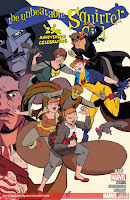 Unbeatable Squirrel Girl #16, by Ryan North (writer), Will Murray (writer), Erica Henderson (artist), Steve Dtiko (artist), Rico Renzi (color artist), Travis Lanham (letterer) - The John Allison variant was the only available option at the store, and there was friggin' Brad in the lower corner among the Squirrel Girl foes. Nice touch not having Doom there. He wouldn't show up and be recognized as a "defeated foe".
The story tracks Doreen from birth, thru learning she can speak to squirrels, to saving the Hulk from the Abomination, to her 20th birthday party with all her friends. Said party is crashed by the Red Skull, who is quickly trounced, though I refuse to believe that Tony Stark has never uppercutted a bad guy through the ceiling. Also, given her approach to concussions, I imagine Doreen could have a long career as an "independent" physician for an NFL team. "Nah, you don't need to come out of the game, it'll wear off."
Doreen as a little kid was appropriately adorable, and 10-year old Doreen's Dazzler poster and Thing clock were cute touches. It's important for kids to learn that it is always Clobberin' Time. I wish someone had told me that when I was 10, how different things might be. I'd probably be in jail. Wait. On other topics, I feel like Erica Henderson's version of the Hulk owes a lot to Mark Ruffalo. Mostly the last page with him, as he's taking the Abomination while refusing to share credit for the win. The chin, or the look on his face before he jumps off. It's mostly not a look I associate with child-speak Hulk.
Doreen's stated love for Nancy Drew and being a detective in the 15-year old sequence makes me want to see the creative team do a mystery story. Put her and Nancy in a "haunted" mansion, or solving a series of thefts from the university commissary, something.
 Avengers #3.1, by Mark Waid (writer), Barry Kitson (penciler/inker), Mark Farmer and Rafael Fonteriz (inkers), Jordan Boyd and Wil Quintana (colorists), Ferran Delgado (letterer) - Ah, there's the average citizens of the Marvel Universe I remember, chucking garbage at the heroes.
The public is unconvinced by the Avengers, but they trounce the Mad Thinker with Cressida's (or Avenger X) help. Now the public loves them, but Cressida is sowing doubt among their ranks, and when Pietro storms out at her suggestions, she remotely boosts Ox' power, and Pietro gets his ass beat by an Enforcer. I like how Ox doesn't even notice anything is different. He just seems to assume it makes perfect sense he can beat up Quicksilver. On another note, was Hawkeye this much of an ass to Jarvis back in the day? I know that a question that starts with, 'Was Hawkeye this much of an ass. . .' is almost certainly answered "YES," but the extent he's abusing poor Jarvis is surprising. That said, I'm eagerly anticipating Jarvis' revenge, whatever form it takes.
Credit to Waid, though. I was worried Cressida was going to fall into the trope of the shy girl who doesn't really understand her powers. Where she's scared and hiding things because of it. Instead, she's using that as a cover, so that the Avengers don't look to closely at how her powers work (and the lack of a scientist on the roster surely isn't helping there), and don't question all the things she so innocently suggests to them about their teammates. And she's made them reliant on her, so they've stopped building teamwork and cooperation.
I don't know what happened to that guy Ox was beating up. Pietro pulled him away, but I don't know where he left him before losing the fight. And Ox walked off with Fancy Dan and Montana under his arms. Hopefully he got to a hospital, because his face was looking pretty pulped. Kitson makes the miniature Awesome Androids regurgitating more miniature Awesome Androids look kind of gross, which does seem like it would be gross. On the other hand, he overemphasizes those parts of Pietro's hair that stick up slightly when viewed through Daredevil's radar sense. It looks like Pietro has Batman ears, or Wolverine hair.
 Unbeatable Squirrel Girl #16, by Ryan North (writer), Will Murray (writer), Erica Henderson (artist), Steve Dtiko (artist), Rico Renzi (color artist), Travis Lanham (letterer) - The John Allison variant was the only available option at the store, and there was friggin' Brad in the lower corner among the Squirrel Girl foes. Nice touch not having Doom there. He wouldn't show up and be recognized as a "defeated foe".
The story tracks Doreen from birth, thru learning she can speak to squirrels, to saving the Hulk from the Abomination, to her 20th birthday party with all her friends. Said party is crashed by the Red Skull, who is quickly trounced, though I refuse to believe that Tony Stark has never uppercutted a bad guy through the ceiling. Also, given her approach to concussions, I imagine Doreen could have a long career as an "independent" physician for an NFL team. "Nah, you don't need to come out of the game, it'll wear off."
Doreen as a little kid was appropriately adorable, and 10-year old Doreen's Dazzler poster and Thing clock were cute touches. It's important for kids to learn that it is always Clobberin' Time. I wish someone had told me that when I was 10, how different things might be. I'd probably be in jail. Wait. On other topics, I feel like Erica Henderson's version of the Hulk owes a lot to Mark Ruffalo. Mostly the last page with him, as he's taking the Abomination while refusing to share credit for the win. The chin, or the look on his face before he jumps off. It's mostly not a look I associate with child-speak Hulk.
Doreen's stated love for Nancy Drew and being a detective in the 15-year old sequence makes me want to see the creative team do a mystery story. Put her and Nancy in a "haunted" mansion, or solving a series of thefts from the university commissary, something.
 Avengers #3.1, by Mark Waid (writer), Barry Kitson (penciler/inker), Mark Farmer and Rafael Fonteriz (inkers), Jordan Boyd and Wil Quintana (colorists), Ferran Delgado (letterer) - Ah, there's the average citizens of the Marvel Universe I remember, chucking garbage at the heroes.
The public is unconvinced by the Avengers, but they trounce the Mad Thinker with Cressida's (or Avenger X) help. Now the public loves them, but Cressida is sowing doubt among their ranks, and when Pietro storms out at her suggestions, she remotely boosts Ox' power, and Pietro gets his ass beat by an Enforcer. I like how Ox doesn't even notice anything is different. He just seems to assume it makes perfect sense he can beat up Quicksilver. On another note, was Hawkeye this much of an ass to Jarvis back in the day? I know that a question that starts with, 'Was Hawkeye this much of an ass. . .' is almost certainly answered "YES," but the extent he's abusing poor Jarvis is surprising. That said, I'm eagerly anticipating Jarvis' revenge, whatever form it takes.
Credit to Waid, though. I was worried Cressida was going to fall into the trope of the shy girl who doesn't really understand her powers. Where she's scared and hiding things because of it. Instead, she's using that as a cover, so that the Avengers don't look to closely at how her powers work (and the lack of a scientist on the roster surely isn't helping there), and don't question all the things she so innocently suggests to them about their teammates. And she's made them reliant on her, so they've stopped building teamwork and cooperation.
I don't know what happened to that guy Ox was beating up. Pietro pulled him away, but I don't know where he left him before losing the fight. And Ox walked off with Fancy Dan and Montana under his arms. Hopefully he got to a hospital, because his face was looking pretty pulped. Kitson makes the miniature Awesome Androids regurgitating more miniature Awesome Androids look kind of gross, which does seem like it would be gross. On the other hand, he overemphasizes those parts of Pietro's hair that stick up slightly when viewed through Daredevil's radar sense. It looks like Pietro has Batman ears, or Wolverine hair.
Thursday, January 19, 2017
Osborn Would Never Expect To Be Attacked With Colored Tiles
The Icepocalypse wound up being somewhat of a dud, which is fine with me. I spent the weekend mostly comfortably inside, relaxing. Mostly relaxing. I spent too much time on Marvel Puzzle Quest, which is probably not a good idea for how irritated I can get with it.
 It's one of those games like Bejewled, where you try to match up three of the same colored tiles. In this case, matching the tiles represents an attack made by a comic character against an opponent. The goal is to knock out their three-person team before all of yours do. The characters even level up, and have special attacks earned by collecting a certain number of particular colors. There's even a story to the whole thing, loosely based around Dark Reign, Osborn being boss of all superheroes, forming his crappy Dark Avengers, consorting with various criminals. They added in something about an alien mineral called Iso-8, which Osborn is using in experiments on mutants. I think that's mostly in there to provide a different brand of generic cannon fodder, and as an excuse to involve the X-Men as playable characters.
When the game is going well, it's a lot of fun. You can put the different characters' special powers to use to boost each other. It's a pleasant feeling when you use Black Widow's Widow's Sting (which costs 9 blue tiles) to stun the opponent so they can't do anything, and then, before it wears off, use Hawkeye's Take Aim power to get enough blue tiles (plus a critical attack bonus) so the Widow can use it again when it wears off. Very handy, especially against enemies that are 50, 60 levels higher than my characters.
Which is one problem I have with the game, that the levels increase on the enemies really damn fast, faster than I can level up my characters simply by progressing through the story. I guess maybe if I only used the same three characters all the time, but what's the point in having a couple dozen options if I'm only going to use three? So I had to keep going back and playing earlier levels to try and boost my characters up enough to match up. Wasn't expecting to level grind when I started this game.
The weird thing is, I tend to find the fights against generic characters tougher than the ones against Dark Avengers. The generics rarely actually move tiles, but somehow they also get credit for the tiles I match, and they have irritating special powers that can do a lot of damage, especially when I'm at a 60-level deficit. They convert some yellow or blue tile into a countdown timer, and the harder I try to match those and get rid of them, the more of them they throw on the board. So you get situations like Thor or the Juggernaut being wiped out by a Thug with a Pistol. That happened a lot.
So it's frustrating at times. I repeatedly get fed up, turn it off, swear I'm done. But it's really easy to convince myself that if I just got the right layout of tiles early, I can get a strong start and pull it off. Sometimes it even works out exactly like that. Other times, it seems like no matter how good of a move I make (because you can get a nice chain reaction of matches if you play it right/get lucky), it only succeeds in setting the computer up for some massively damaging string of attacks on me. I mutter, "This thing is rigged," a lot. But it can sure eat time, which is probably a good enough reason to let it drop for a while.

When the game is going well, it's a lot of fun. You can put the different characters' special powers to use to boost each other. It's a pleasant feeling when you use Black Widow's Widow's Sting (which costs 9 blue tiles) to stun the opponent so they can't do anything, and then, before it wears off, use Hawkeye's Take Aim power to get enough blue tiles (plus a critical attack bonus) so the Widow can use it again when it wears off. Very handy, especially against enemies that are 50, 60 levels higher than my characters.
Which is one problem I have with the game, that the levels increase on the enemies really damn fast, faster than I can level up my characters simply by progressing through the story. I guess maybe if I only used the same three characters all the time, but what's the point in having a couple dozen options if I'm only going to use three? So I had to keep going back and playing earlier levels to try and boost my characters up enough to match up. Wasn't expecting to level grind when I started this game.
The weird thing is, I tend to find the fights against generic characters tougher than the ones against Dark Avengers. The generics rarely actually move tiles, but somehow they also get credit for the tiles I match, and they have irritating special powers that can do a lot of damage, especially when I'm at a 60-level deficit. They convert some yellow or blue tile into a countdown timer, and the harder I try to match those and get rid of them, the more of them they throw on the board. So you get situations like Thor or the Juggernaut being wiped out by a Thug with a Pistol. That happened a lot.
So it's frustrating at times. I repeatedly get fed up, turn it off, swear I'm done. But it's really easy to convince myself that if I just got the right layout of tiles early, I can get a strong start and pull it off. Sometimes it even works out exactly like that. Other times, it seems like no matter how good of a move I make (because you can get a nice chain reaction of matches if you play it right/get lucky), it only succeeds in setting the computer up for some massively damaging string of attacks on me. I mutter, "This thing is rigged," a lot. But it can sure eat time, which is probably a good enough reason to let it drop for a while.
Wednesday, January 18, 2017
What I Bought 1/12/2017 - Part 2
I'm typing this last Friday, as much of Missouri braces for Ice Deathstorm: The Slip and Break Your Butt-Pocalypse. Maybe Icepocalypse is better. Either way, by the time this posts, hopefully I have emerged unscathed.
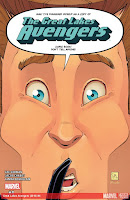 Great Lakes Avengers #4, by Zac Gorman (writer), Jacob Chabot (artist), Marissa Louise with Tamra Bonvillain (color artists), Joe Caramagna (letterer) - I keep thinking Flatman is getting ready to scratch under his nose, rather than making the "ssh" motion.
Bertha and Good Boy brought Snerd back to their HQ and tied him up in the closet. Snerd tries to justify his actions by arguing he's making real changes and improvements, and so what if a few people get hurt. Unfortunately they can't prove any of it, and they weren't supposed to be superheroing anyway, since Connie hadn't gotten the injunction lifted. But Snerd does a little too good of a job arguing the strength of his position, and Good may have killed him. I guess he was still making noises when they tossed him in front of the hospital and sped off. And he survived a gunshot wound in the chest in his flashback, so maybe he has healing powers?
Story took a dark turn there in a hurry. I thought Chabot's art in the panel where Good pounces on Snerd has a resemblance to '50s horror comics. The stories where the asshole main character gets a bad surprise comeuppance right and the end, maybe a cackling narrator to finish things off? I think it's the look of horror on his face, combined with the shading for Good's musculature. Maybe also the shades of orange Louise and/or Bonvillain used, and all those emphasis lines around the edge of the panel. Or maybe it's just because it's a werewolf pouncing on someone with intent to kill them.
Overall, Chabot did a fine job as fill-in artist. He draws Bertha a little more pear-shaped than Robson, but close enough. Maybe there's just less definition in her upper body. He dialed Connie's facial expressions way back, which is a plus. She can still look angry enough to tear off your face at times, but she doesn't look that way all the time here. Ditto for Snerd, although I was less bothered by him looking like he was so angry he was about to mess his drawers. Still, it wouldn't make sense as his expression in every situation. Sometimes a guy needs to look more smug, or conniving, or just scared. I do notice Mr. Immortal's stubble is gone, thank goodness. Going to assume Flatman stopped a bought him a razor. Oh, and the drunk guy from last issue does not seem to have joined the team. Oh well.
 Deadpool #24, by Gerry Duggan (writer), Matteo Lolli (penciler), Christian Dalla Vecchia (inker), Guru-eFX (colorist), Joe Sabino (letterer) - I wouldn't be surprised if Preston shot Wade in the leg there, just for partially blocking her view. Or just because.
Wade provides the cure for the disease he got from Stryfe, for which Stryfe expects him to kill some people for him later. Didn't wade go through this once already with Vetis, the demon? Whatever, worry about it later. Wade realizes Madcap faked the call from Ellie to get him there to infect her, and uses that to track Madcap to a HYDRA base because Madcap is riding around on Bob. Deadpool tells Madcap everything he thinks he knows about himself is a lie (must have missed that issue), Madcap triggers explosives, tears loose from Bob, and escapes.
He fucking escapes. So this carnival ride is going to continue? Duggan is starting to try my patience. I was pretty much ready to be done with Madcap, and hey, Wade could still be stuck dealing with fallout from whatever Madcap got up to disguised as Deadpool. But no. On the plus side, I think we've established Preston might be almost as into Cable as Wade is, given she keeps referring to him as a "silver fox".
The assault on the HYDRA base was pretty good, for the sheer fact neither Wade nor Preston were messing around. In one panel, Preston smashes through a ceiling, and as she bloodily jams a pipe into one HYDRA guys shoulder, she's bringing her LMD-knee down on another's head, popping it like a water balloon. I don't know if the eyes would go shooting off in opposite directions like Lolli drew, but it's a distinctive image to be sure. And then you get one HYDRA guy asking to be arrested, and Wade shoots him. So the last HYDRA guy tries surrendering to Preston, and she punches through his chest with a line about being off the clock.
I should probably be more bothered by these things. Those guys were surrendering, and that does bug me, but 1) It's not like I'm surprised if Wade makes choices I find morally questionable. 2) Preston is pissed and after the being who nearly killed her husband and children. 3) The surrendering guys in question work for HYDRA. They are basically Nazis (or Nazi collaborators). However much I might laugh at the antics and misfortune of HYDRA Bob in Cable/Deadpool, HYDRA is bad news, and these guys signed on to further that, even if they're doing it for the healthcare or whatever. Also, in that universe, they signed on for encountering costumed types. Sometimes they get Spider-Man or Captain America and it's off to jail. Sometimes they get Wolverine or Deadpool and it's off to the morgue, assuming there's anything left of them.
 Great Lakes Avengers #4, by Zac Gorman (writer), Jacob Chabot (artist), Marissa Louise with Tamra Bonvillain (color artists), Joe Caramagna (letterer) - I keep thinking Flatman is getting ready to scratch under his nose, rather than making the "ssh" motion.
Bertha and Good Boy brought Snerd back to their HQ and tied him up in the closet. Snerd tries to justify his actions by arguing he's making real changes and improvements, and so what if a few people get hurt. Unfortunately they can't prove any of it, and they weren't supposed to be superheroing anyway, since Connie hadn't gotten the injunction lifted. But Snerd does a little too good of a job arguing the strength of his position, and Good may have killed him. I guess he was still making noises when they tossed him in front of the hospital and sped off. And he survived a gunshot wound in the chest in his flashback, so maybe he has healing powers?
Story took a dark turn there in a hurry. I thought Chabot's art in the panel where Good pounces on Snerd has a resemblance to '50s horror comics. The stories where the asshole main character gets a bad surprise comeuppance right and the end, maybe a cackling narrator to finish things off? I think it's the look of horror on his face, combined with the shading for Good's musculature. Maybe also the shades of orange Louise and/or Bonvillain used, and all those emphasis lines around the edge of the panel. Or maybe it's just because it's a werewolf pouncing on someone with intent to kill them.
Overall, Chabot did a fine job as fill-in artist. He draws Bertha a little more pear-shaped than Robson, but close enough. Maybe there's just less definition in her upper body. He dialed Connie's facial expressions way back, which is a plus. She can still look angry enough to tear off your face at times, but she doesn't look that way all the time here. Ditto for Snerd, although I was less bothered by him looking like he was so angry he was about to mess his drawers. Still, it wouldn't make sense as his expression in every situation. Sometimes a guy needs to look more smug, or conniving, or just scared. I do notice Mr. Immortal's stubble is gone, thank goodness. Going to assume Flatman stopped a bought him a razor. Oh, and the drunk guy from last issue does not seem to have joined the team. Oh well.
 Deadpool #24, by Gerry Duggan (writer), Matteo Lolli (penciler), Christian Dalla Vecchia (inker), Guru-eFX (colorist), Joe Sabino (letterer) - I wouldn't be surprised if Preston shot Wade in the leg there, just for partially blocking her view. Or just because.
Wade provides the cure for the disease he got from Stryfe, for which Stryfe expects him to kill some people for him later. Didn't wade go through this once already with Vetis, the demon? Whatever, worry about it later. Wade realizes Madcap faked the call from Ellie to get him there to infect her, and uses that to track Madcap to a HYDRA base because Madcap is riding around on Bob. Deadpool tells Madcap everything he thinks he knows about himself is a lie (must have missed that issue), Madcap triggers explosives, tears loose from Bob, and escapes.
He fucking escapes. So this carnival ride is going to continue? Duggan is starting to try my patience. I was pretty much ready to be done with Madcap, and hey, Wade could still be stuck dealing with fallout from whatever Madcap got up to disguised as Deadpool. But no. On the plus side, I think we've established Preston might be almost as into Cable as Wade is, given she keeps referring to him as a "silver fox".
The assault on the HYDRA base was pretty good, for the sheer fact neither Wade nor Preston were messing around. In one panel, Preston smashes through a ceiling, and as she bloodily jams a pipe into one HYDRA guys shoulder, she's bringing her LMD-knee down on another's head, popping it like a water balloon. I don't know if the eyes would go shooting off in opposite directions like Lolli drew, but it's a distinctive image to be sure. And then you get one HYDRA guy asking to be arrested, and Wade shoots him. So the last HYDRA guy tries surrendering to Preston, and she punches through his chest with a line about being off the clock.
I should probably be more bothered by these things. Those guys were surrendering, and that does bug me, but 1) It's not like I'm surprised if Wade makes choices I find morally questionable. 2) Preston is pissed and after the being who nearly killed her husband and children. 3) The surrendering guys in question work for HYDRA. They are basically Nazis (or Nazi collaborators). However much I might laugh at the antics and misfortune of HYDRA Bob in Cable/Deadpool, HYDRA is bad news, and these guys signed on to further that, even if they're doing it for the healthcare or whatever. Also, in that universe, they signed on for encountering costumed types. Sometimes they get Spider-Man or Captain America and it's off to jail. Sometimes they get Wolverine or Deadpool and it's off to the morgue, assuming there's anything left of them.
Tuesday, January 17, 2017
American Ultra (2015)
Having seen American Ultra over the weekend, yeah, they wasted Walton Goggins. He laughs a lot, loses a couple of teeth, and gets a speech at the end that hammers some theme of the film in a remarkably unsubtle manner. Not much to work with.
His character is a possible psychotic the CIA turned into a killer for them, and is one of many Topher Grace tries to use to kill Mike Howell (Jesse Eisenberg), who years ago agreed to be used for an experiment in exchange for getting out of prison. Eisenberg's memories of this were buried, but when he was about to be killed as a loose end, the agent in charge of the project uses the trigger word, and he proceeds to lay waste to most of the killers sent after him. Major assist from Kristen Stewart's character who was his handler and decided to stick around and watch over him/be his girlfriend.
The end is kind of crap. Eisenberg, who was after all, taken advantage of in a time of desperation by the government and used, first as a lab rat, then as a killer, is targeted for execution because Topher Grace is an asskissing toady who wants a promotion. Eisenberg, having refused to die, ends up working for the CIA again, killing people, as the only alternative to being taken into the middle of nowhere and shot twice in the back of the head. Bill Pullman, who runs the CIA, gets a nice killing machine, rather than some bullets in the face. I mean, what's that say? If you're experimented on and used by the government, your only hope is to lean into it and continue to be a useful tool?
Oh, and Goggins' character is almost certainly running around loose. In a more optimistic movie, I would hope that Mike showing mercy helped Laffer and he isn't busy turning into Steve Buscemi's character from Con Air. But this isn't exactly a film that encourages that interpretation.
Granting my perspective is skewed by years of watching characters in action movies take extraordinary amounts of punishment and keep going, I did wonder at how easily Mike was able to defeat some of the trained killers in the supermarket. I'm not sure whether a metal dustpan is that effective as a stabbing implement. But the one I noted most was I think he took out one guy by smashing him over the head with a jar of something he just grabbed off a shelf. I think it was pickles. One shot to the head, and the guy dropped. That happened a lot, albeit usually with things more suited to the task than a jar.
There were some good scenes in the film, Stewart and Eisenberg both did fine. Nothing great, but I'd been meaning to get around to seeing it for awhile, so mission accomplished.
His character is a possible psychotic the CIA turned into a killer for them, and is one of many Topher Grace tries to use to kill Mike Howell (Jesse Eisenberg), who years ago agreed to be used for an experiment in exchange for getting out of prison. Eisenberg's memories of this were buried, but when he was about to be killed as a loose end, the agent in charge of the project uses the trigger word, and he proceeds to lay waste to most of the killers sent after him. Major assist from Kristen Stewart's character who was his handler and decided to stick around and watch over him/be his girlfriend.
The end is kind of crap. Eisenberg, who was after all, taken advantage of in a time of desperation by the government and used, first as a lab rat, then as a killer, is targeted for execution because Topher Grace is an asskissing toady who wants a promotion. Eisenberg, having refused to die, ends up working for the CIA again, killing people, as the only alternative to being taken into the middle of nowhere and shot twice in the back of the head. Bill Pullman, who runs the CIA, gets a nice killing machine, rather than some bullets in the face. I mean, what's that say? If you're experimented on and used by the government, your only hope is to lean into it and continue to be a useful tool?
Oh, and Goggins' character is almost certainly running around loose. In a more optimistic movie, I would hope that Mike showing mercy helped Laffer and he isn't busy turning into Steve Buscemi's character from Con Air. But this isn't exactly a film that encourages that interpretation.
Granting my perspective is skewed by years of watching characters in action movies take extraordinary amounts of punishment and keep going, I did wonder at how easily Mike was able to defeat some of the trained killers in the supermarket. I'm not sure whether a metal dustpan is that effective as a stabbing implement. But the one I noted most was I think he took out one guy by smashing him over the head with a jar of something he just grabbed off a shelf. I think it was pickles. One shot to the head, and the guy dropped. That happened a lot, albeit usually with things more suited to the task than a jar.
There were some good scenes in the film, Stewart and Eisenberg both did fine. Nothing great, but I'd been meaning to get around to seeing it for awhile, so mission accomplished.
Monday, January 16, 2017
What I Bought 1/12/2017 - Part 1
The beginning of the year has been pretty Marvel-heavy. I expect that'll change over the second half of the month.
 Nova #2, by Jeff Loveness (writer), Ramon Perez (writer/artist), Ian Herring (color artist), Albert Deschesne (letterer) - Inside, it's more Sam rescuing Richard than what you see here.
Sam finds Rich under attack by the Cancerverse thing that came out of him last issue. The two drive it back into a tear, then Sam takes Rich to the Champions to confirm Rich is who he says he is. Although I'm at a loss as to where Sam got a sample of Rich for Amadeus to compare the live person to. That's pretty creepy, like Tony Stark keeping Thor's hair to make a cyborg clone creepy.
As usual, the heroes of Earth are morons who have no clue Richard saved the damn universe like 17 times while they were busy punching each other over legislation. He attends Sam's family get-together, which seems a little odd - 16-year old kid brings mid-20s(?) guy to family thing - but it seems to pass without comment, and they fly to Knowhere to visit Cosmo. Then Death's Head attacks them, along with two other guys I don't know.
I like how Richard and Sam play off each other (and putting them together neatly eliminates my complaint from last month about there not being enough Rich). Richard is the veteran, but he's been away, he's a little confused, a little unsteady, and Sam gets to be the stabilizing influence. Perez and Loveness are managing a nice balancing act there, so far. And we'll have to wait and see why Richard is unwilling to admit the creature came from him. I'm sure it's part of the reason he's alive again, why he saw the "tear" to drive it into and Sam didn't, but Rich ought to know hiding that stuff doesn't help anything.
OK, I know I said last month I liked Perez drawing Rich's shoulder things as being modular, and I do, but they're getting a bit large. As in, they're starting to reach Cable-level shoulder pad size, and that's not a good sign. The variety of aliens in the bar was nice. I especially like the gooey thing with the one eye in the center of the panel on page 17. And Sam;s body language in that panel where Cosmo tries to explain calling Rich his favorite Nova. But hey, Rich did kill Annihilus like a boss. And he was a New Warrior, and that's much cooler than being an Avenger. Those dorks let anyone join, including Sabretooth.
 Ms. Marvel #14, by G. Willow Wilson (writer), Takeshi Miyazawa (artist), Ian Herring (color artist), Joe Caramagna (letterer) - Well, gee, I'm not sure I'm rooting for Kamala after she made Richard sad in our last book.
Kamala's online RPGing takes a worrying turn when one of her guildmates says something that suggests he knows where she lives. She tries tracking the guy down, but the player claims his account was hacked. Soon, someone who can control machines is attacking her remotely with cars and construction equipment, and knows Kamala is Ms. Marvel.
Kamala is making the classic Batman mistake of distancing herself from her support network when she;s under stress. Granting that Bruno is gone, and Mike is in a bad way, she turns away from her family, and I guess going to Nakia or Zoe is out. At least as Ms. Marvel. She could have gone to her friends as Kamala, and asked for some help. Yeah, I don't know what they could do against this guy, but she barely even considers getting help, which is a bad sign. I'm also not sure she should have dismissed Maxwell as a suspect so quickly. It probably isn't him, but if this enemy is as good with technology as they appear, they could easily figure out she was trying to track them and pretend someone hacked them.
Interesting choice for her to ride the ferry in Embiggened form. Keeps people at a distance, but also makes her more visible, a more obvious target. Also, her deciding to deal with the car attack by getting bigger and meeting it head-on seems a little unlike her. The way there's a panel that focus on her arm and torn costume after she jumps out of the excavator doesn't seem like a coincidence, either. Overall, she isn't acting like herself, at the time all the things she thought she could rely on are crumbling beneath her. Around her? They're crumbling, regardless. She can't seem to fix any of it, can't patch things up with Bruno, help Mike, trust Tony Stark or Carol Danvers, she's angry, she's frustrated and impatient, and she's trying to deal with things directly that don't seem like they can be.
 Nova #2, by Jeff Loveness (writer), Ramon Perez (writer/artist), Ian Herring (color artist), Albert Deschesne (letterer) - Inside, it's more Sam rescuing Richard than what you see here.
Sam finds Rich under attack by the Cancerverse thing that came out of him last issue. The two drive it back into a tear, then Sam takes Rich to the Champions to confirm Rich is who he says he is. Although I'm at a loss as to where Sam got a sample of Rich for Amadeus to compare the live person to. That's pretty creepy, like Tony Stark keeping Thor's hair to make a cyborg clone creepy.
As usual, the heroes of Earth are morons who have no clue Richard saved the damn universe like 17 times while they were busy punching each other over legislation. He attends Sam's family get-together, which seems a little odd - 16-year old kid brings mid-20s(?) guy to family thing - but it seems to pass without comment, and they fly to Knowhere to visit Cosmo. Then Death's Head attacks them, along with two other guys I don't know.
I like how Richard and Sam play off each other (and putting them together neatly eliminates my complaint from last month about there not being enough Rich). Richard is the veteran, but he's been away, he's a little confused, a little unsteady, and Sam gets to be the stabilizing influence. Perez and Loveness are managing a nice balancing act there, so far. And we'll have to wait and see why Richard is unwilling to admit the creature came from him. I'm sure it's part of the reason he's alive again, why he saw the "tear" to drive it into and Sam didn't, but Rich ought to know hiding that stuff doesn't help anything.
OK, I know I said last month I liked Perez drawing Rich's shoulder things as being modular, and I do, but they're getting a bit large. As in, they're starting to reach Cable-level shoulder pad size, and that's not a good sign. The variety of aliens in the bar was nice. I especially like the gooey thing with the one eye in the center of the panel on page 17. And Sam;s body language in that panel where Cosmo tries to explain calling Rich his favorite Nova. But hey, Rich did kill Annihilus like a boss. And he was a New Warrior, and that's much cooler than being an Avenger. Those dorks let anyone join, including Sabretooth.

Kamala's online RPGing takes a worrying turn when one of her guildmates says something that suggests he knows where she lives. She tries tracking the guy down, but the player claims his account was hacked. Soon, someone who can control machines is attacking her remotely with cars and construction equipment, and knows Kamala is Ms. Marvel.
Kamala is making the classic Batman mistake of distancing herself from her support network when she;s under stress. Granting that Bruno is gone, and Mike is in a bad way, she turns away from her family, and I guess going to Nakia or Zoe is out. At least as Ms. Marvel. She could have gone to her friends as Kamala, and asked for some help. Yeah, I don't know what they could do against this guy, but she barely even considers getting help, which is a bad sign. I'm also not sure she should have dismissed Maxwell as a suspect so quickly. It probably isn't him, but if this enemy is as good with technology as they appear, they could easily figure out she was trying to track them and pretend someone hacked them.
Interesting choice for her to ride the ferry in Embiggened form. Keeps people at a distance, but also makes her more visible, a more obvious target. Also, her deciding to deal with the car attack by getting bigger and meeting it head-on seems a little unlike her. The way there's a panel that focus on her arm and torn costume after she jumps out of the excavator doesn't seem like a coincidence, either. Overall, she isn't acting like herself, at the time all the things she thought she could rely on are crumbling beneath her. Around her? They're crumbling, regardless. She can't seem to fix any of it, can't patch things up with Bruno, help Mike, trust Tony Stark or Carol Danvers, she's angry, she's frustrated and impatient, and she's trying to deal with things directly that don't seem like they can be.
Subscribe to:
Posts (Atom)